
eBay Promoted Listings 2026: What Changed, What Works Now
eBay's 2026 promoted-listings changes broken down: Priority CPC, halo attribution, and when organic SEO beats paid ads.

eBay's Promoted Listings Are Changing, and Your Old Strategy Won't Cut It
If you've been running eBay promoted listings the same way you did two or three years ago, 2026 is the year that catches up with you. eBay has been quietly but aggressively restructuring its advertising ecosystem. The changes are significant enough that resellers who don't adapt will pay more, see less, and lose top placement to competitors who've done their homework.
This guide breaks down what's changed, what it costs, and how to build an eBay ad strategy in 2026 that delivers ROI. It works if you're flipping thrift finds, running an estate sale hustle, or managing a growing eBay storefront.
Standard vs. Advanced (CPC): Know Which Model You're Actually Using
eBay's promoted listings now come in two fundamentally different structures. Confusing them is one of the most expensive mistakes a seller can make.
Standard Campaigns (Ad Rate %)
Standard promoted listings work on a percentage-based fee model. You set an ad rate, typically anywhere from 2% to 20%+ of the final sale price. eBay charges you only when a buyer clicks your promoted listing and purchases within the attribution window. No sale, no charge.
This sounds low-risk, and for many casual sellers it still is. But eBay's algorithm increasingly favors sellers who set competitive ad rates, which means the "suggested rate" eBay shows you keeps creeping upward. In competitive categories like sneakers, electronics, and vintage clothing, sellers are bidding 12-18% just to stay visible.
This model suits sellers with healthy margins, steady-selling SKUs, and items in competitive categories where organic placement has slipped.
Advanced (CPC) Campaigns, Now Called Priority Campaigns
This is where things get interesting and expensive. eBay's Advanced promoted listings, increasingly rebranded under the Priority Campaign umbrella, operate on a true cost-per-click (CPC) model. You pay every time someone clicks your listing, regardless of whether they buy.
The trade-off is placement. Priority Campaigns get access to exclusive top ad slots, specifically the prime real estate at the very top of search results pages. That sits above everything else, including organic listings and Standard promoted results. If you want that top placement, Priority is the only way to get it. Period.
CPC bids in competitive categories can range from $0.15 to $2.00+ per click depending on keyword competition. A listing for a vintage Levi's denim jacket might cost you $0.40-$0.80 per click, while a sought-after LEGO set could easily push $1.50+. Budget accordingly.
This model suits high-value items, new listings that need immediate visibility, or cases where ranking at the top of search is worth paying for regardless of conversion.
The 30-Day Halo Attribution Window Is Bigger Than It Sounds
One of the most consequential and least-discussed changes to eBay's ad platform is the 30-day any-click attribution model.
Here's how it works. If a buyer clicks on any of your promoted listings during a 30-day window, and then purchases any item from your store during that same window, eBay attributes that sale to your promoted campaign and charges you accordingly.
Read that again, because it's a big deal.
This halo attribution means you could run a promoted listing on a $15 vintage ceramic mug. A buyer clicks it, browses your store, and then buys a $200 vintage camera you listed organically. eBay charges you the promoted listings fee on that $200 sale. The click that triggered the attribution didn't even lead directly to the purchased item.
What This Means for Your Ad Spend
- Your ad costs may be higher than they appear. If you have a large, varied inventory, a single low-ticket promoted item can trigger fees on much larger sales.
- Promoted listings aren't isolated anymore. Every click is essentially a 30-day fee trigger across your entire store.
- It rewards strategic promotion. If you deliberately promote your best-value, highest-traffic listings, you can use the halo effect intentionally, driving store-wide visibility at a relatively low entry point.
The sellers who get burned are the ones promoting everything indiscriminately. They don't understand that each click opens a 30-day attribution window on their whole account. Be deliberate.
Priority Campaigns: When the Top Slot Is Worth It
eBay's Priority Campaign structure gives you exclusive access to the top ad placement in search. But it's not for every item or every seller.
When Priority Makes Sense
High-margin, fast-moving items work well. If you're flipping items with 50%+ margins, the CPC cost is negligible against the profit. Say you bought a piece of MCM furniture at an estate sale for $40 and it sells for $250. A $0.50-$1.00 per click cost is nothing. Priority campaigns are ideal here.
Time-sensitive inventory is another fit. Got a set of items tied to a trending topic, season, or pop culture moment? Priority gets you top placement fast, without waiting for organic ranking to build.
Competitive categories where organic is buried also qualify. In categories like trading cards, vintage sneakers, or consumer electronics, organic listings can be so far down the page they might as well not exist. For these categories, Priority is essentially a necessity if you want real volume.
New store growth benefits too. If you're building store authority and don't yet have the feedback count or sales history for strong organic placement, Priority campaigns can accelerate that flywheel.
When Priority Doesn't Make Sense
- Low-margin items (under 30% profit) where CPC eats your return
- Items with niche, low-search-volume keywords where competition is minimal anyway
- Items you haven't properly priced. Paying for clicks on a listing priced 20% above market is just burning money.
Before running any paid campaign, make sure your pricing is dialed in. There's no point paying for visibility on a listing that won't convert. If you're unsure whether your prices are competitive, How to Price eBay Items to Sell Fast in 2026 (Avoid Beginner Mistakes) is worth a read before you touch your ad settings. For category-level demand validation, our eBay market research and Terapeak guide shows how to check whether the item is even selling at the rate you need.
Smart Cost Management: Automation and Budget Controls
The single biggest mistake sellers make with eBay's Priority (CPC) campaigns is setting them up and walking away. Without active management, costs spiral fast.
Use Daily Budgets Aggressively
eBay lets you set daily spend caps on CPC campaigns. Use them. Start conservatively, $3-$5/day per campaign, and scale up only on campaigns with proven click-to-sale conversion. A campaign burning $10/day with a 1% conversion rate is a money pit.
Automated Targeting vs. Manual Keywords
eBay now offers both automated keyword targeting, where eBay determines which searches trigger your ad, and manual keyword targeting, where you control it.
For most resellers with diverse, one-of-a-kind inventory like thrift flips, estate sale finds, and vintage items, automated targeting often outperforms manual. eBay's algorithm can surface your item for long-tail searches you wouldn't think to bid on. A vintage Pyrex Pink Gooseberry mixing bowl might get clicks from searches like "vintage kitchen collectibles" that you'd never manually target.
That said, for competitive or high-value items, manual keyword targeting lets you get surgical. Bid on exact item names, model numbers, and known collector search terms to maximize relevance and minimize wasted spend.
Negative Keywords for CPC Campaigns
Yes, eBay now supports negative keywords in Advanced/Priority campaigns. Use them. If you're selling an original 1970s concert poster, exclude terms like "reprint," "reproduction," and "digital download" to avoid paying for clicks from buyers who won't convert.
Layering Promotions for Maximum ROI
eBay promoted listings don't operate in a vacuum. Smart sellers in 2026 are layering multiple promotion types to compound their results.
Promoted Listings Plus Coded Coupons
Running a store-wide sale or sending coded coupons to watchers via eBay's buyer communication tools can improve conversion rates on promoted clicks. If a Priority campaign is getting you top-of-page traffic but your conversion rate is low, a 10% coupon to interested buyers can close the gap without increasing your CPC spend.
Promoted Listings Plus Volume Pricing
For sellers with multiples of the same item, think a box of identical vintage figurines from an estate sale lot, eBay's volume pricing discounts help. A "buy 2, save 10%" offer can increase your average order value on promoted traffic, spreading your CPC cost across a larger transaction.
Promoted Listings Plus Organic SEO
This is the biggest lever most sellers ignore. A well-optimized listing title, complete item specifics, and strong photos work whether you're paying for placement or not. eBay's organic algorithm still rewards listings with high click-through rates and strong conversion metrics. A listing that converts well on promoted traffic also tends to rank better organically over time.
If you want to build organic ranking strength alongside your paid campaigns, the eBay Organic SEO Guide 2026: Thrive After Promoted Listings Changes covers that side of the equation in detail.
Tracking ROI: Numbers You Actually Need to Watch
eBay provides campaign analytics, but the default dashboard view can be misleading. Here's how to read your numbers honestly.
The Metrics That Matter
Watch total ad spend vs. attributed sales revenue. eBay shows you "attributed sales," meaning sales it considers connected to your promoted campaign. Divide your total spend by attributed revenue to get your effective ad cost percentage. If you spent $45 and eBay attributes $300 in sales to your campaign, your effective rate is 15%. Whether that's acceptable depends entirely on your margins.
Watch actual conversion rate. Clicks ÷ Sales = Conversion rate. For eBay, a healthy conversion rate on promoted traffic typically runs 2-8%. Anything below 1.5% means your listing itself is the problem, whether pricing, photos, title, or item condition, not your bid.
Watch true profit after ads. This is the number most sellers forget to calculate. Take your selling price, subtract eBay's final value fee (typically 12-15% depending on category), subtract your promoted listings fee or CPC spend, subtract your sourcing cost and shipping. What's left is your actual profit.
On a $50 item bought for $8:
- Sale price: $50
- eBay FVF (13%): -$6.50
- Promoted listing (10% Standard): -$5.00
- Sourcing cost: -$8.00
- Shipping materials: -$2.00
- Actual profit: ~$28.50
That's still a solid flip. But if you're running Priority CPC and paying $1.20 in clicks per sale, that math changes. On a $20 item with a $4 sourcing cost, it gets ugly fast.
The Power User Dashboard for Advanced Campaigns
eBay's Seller Hub now includes more granular analytics for Advanced/Priority campaign users, including impression share data and keyword-level performance. If you're running CPC campaigns, check keyword-level data weekly. Pause keywords with high impressions and zero conversions after 50+ clicks. They're eating budget with no return.
The Pay-to-Play Reality of eBay in 2026
Let's be honest about what's happening. eBay's promoted listings ecosystem has become increasingly pay-to-play. According to eBay's own seller communications and marketplace reports, the majority of top search positions in competitive categories now go to promoted results, whether Standard, Advanced, or Priority. Organic visibility alone is harder to maintain than it was even two years ago.
This doesn't mean you have to run paid campaigns on everything. But if you're sourcing high-competition items like brand-name vintage clothing, collectible toys, and popular electronics, you need to factor advertising costs into your margin calculation before you buy, not after.
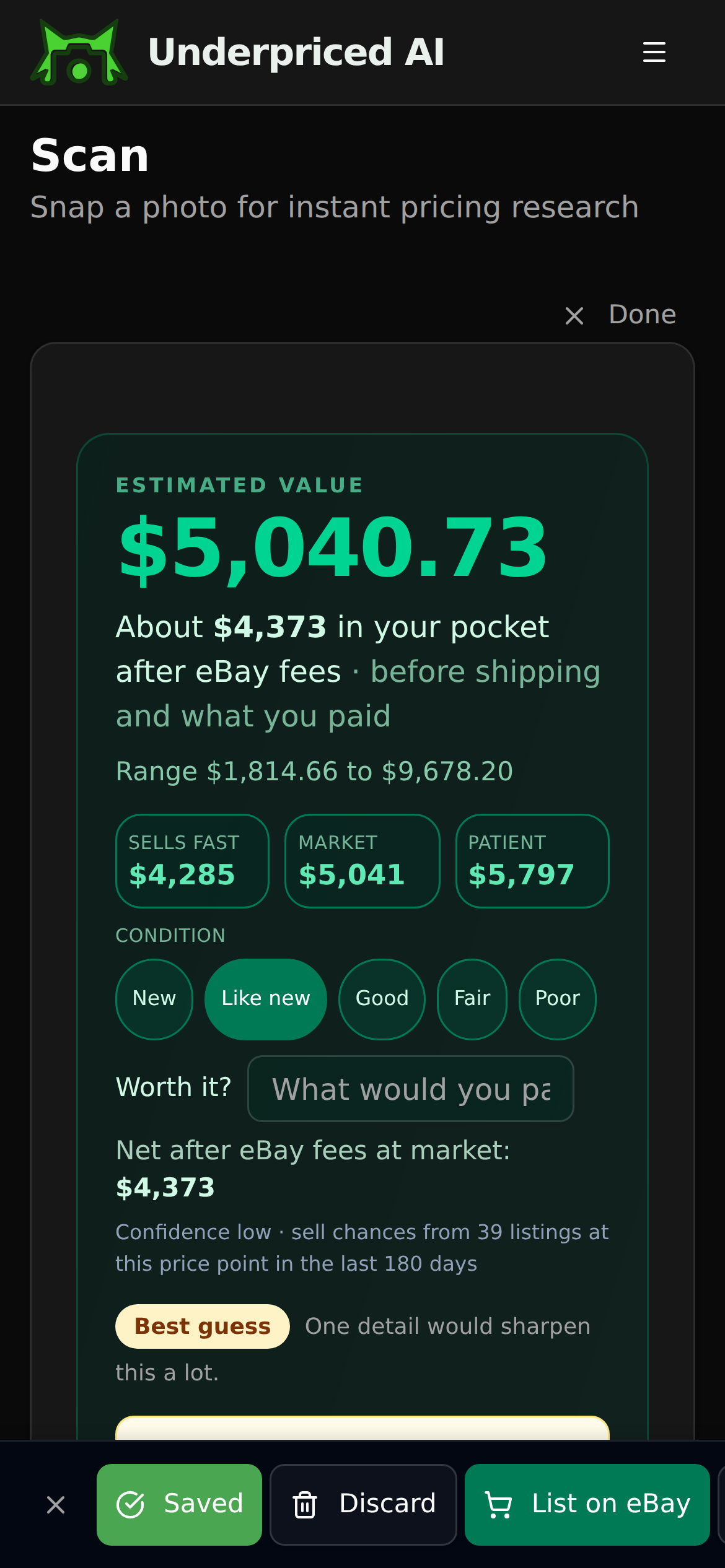
This is exactly where pre-purchase pricing intelligence matters. Knowing a thrift store find's realistic resale value before you commit, including what you'll spend on promotion, is the difference between a profitable flip and a break-even headache. Tools like Underpriced AI can give you that market data at the point of sourcing so you're not guessing at the register.
For competitive categories where eBay ad strategies 2026 demand real investment, your sourcing margin needs to be fat enough to absorb it. A $12 item that sells for $30 doesn't have room for Priority CPC. A $15 item that sells for $120 does.
A Practical Framework for Putting It All Together
Here's a simplified decision framework for eBay promoted listings in 2026.
-
Check margin first. If your gross margin (sale price minus sourcing cost) is under 40%, use Standard only, and at conservative rates of 5-8%. Reserve CPC/Priority for higher-margin items.
-
Categorize your inventory. Items in crowded categories like sneakers, video games, and brand-name clothing need promotion. Niche collectibles with low search competition may rank organically just fine.
-
Start Standard, escalate to Priority selectively. Run Standard campaigns on most inventory. Upgrade to Priority only for your highest-value, highest-margin listings where top-slot placement meaningfully increases conversion.
-
Set budget caps and review weekly. No set-and-forget. Check campaign performance every 7 days, pause underperformers, and reinvest in what's working.
-
Remember the 30-day halo window. Be intentional about what you promote, because every click opens an attribution window across your store.
-
Keep optimizing the listing itself. Paid promotion amplifies what's already there. A bad listing with a big ad budget is just a fast way to spend money. Strong titles, accurate item specifics, and competitive pricing are the foundation, as covered in How to Optimize eBay Listings for More Sales in 2026: Complete Guide.
Frequently Asked Questions
How much do eBay promoted listings cost in 2026?
It depends on the model. Standard campaigns charge a percentage of the final sale price, typically 2% to 20% or more, and only when a click leads to a purchase. Priority CPC campaigns charge per click, roughly $0.15 to $2.00 or more depending on keyword competition. A vintage Levi's jacket might run $0.40 to $0.80 per click, a sought after LEGO set $1.50 plus.
Do I get charged if a buyer clicks a promoted listing but buys something else from my store?
Yes. eBay uses 30-day any-click attribution. If a buyer clicks any of your promoted listings and then purchases any item from your store within that 30-day window, eBay attributes the sale to your campaign and charges accordingly. A click on a promoted $15 mug can trigger a fee on a $200 camera you listed organically, so promote deliberately.
Are eBay promoted listings worth it on cheap or low margin items?
Usually not for Priority CPC. If your gross margin is under 40%, stick to Standard campaigns at conservative rates of 5% to 8%. A $12 item selling for $30 has no room to absorb per click costs, while a $15 item selling for $120 does. Checking realistic resale value before you buy helps: with Underpriced AI, the first scan is free on web or mobile, no card.
Should I use automated or manual keyword targeting on eBay ads?
For diverse, one of a kind inventory like thrift flips and estate finds, automated targeting often outperforms manual because eBay surfaces long tail searches you would never bid on yourself. Manual targeting is better for competitive, high value items where you bid on exact names, model numbers and collector terms. Add negative keywords such as reprint or reproduction, and review keyword data weekly.
Know Your Numbers Before You List
eBay's promoted listings ecosystem in 2026 is more complex, more expensive, and more powerful than it's ever been. The sellers who thrive aren't necessarily the ones with the biggest ad budgets. They're the ones who understand the mechanics, source inventory with healthy margins, and deploy promotion strategically rather than reflexively.
Standard campaigns still offer solid ROI for the right items. Priority Campaigns offer unmatched visibility at the top of search, but only if your margins and conversion rates can support the CPC cost. The 30-day halo attribution changes how you think about what to promote. And organic SEO remains your most cost-efficient long-term play, running in parallel with whatever paid strategy you build.
Know your numbers. Be deliberate with your spend. The best eBay ad strategy starts before you ever list. It starts when you're deciding what to buy.
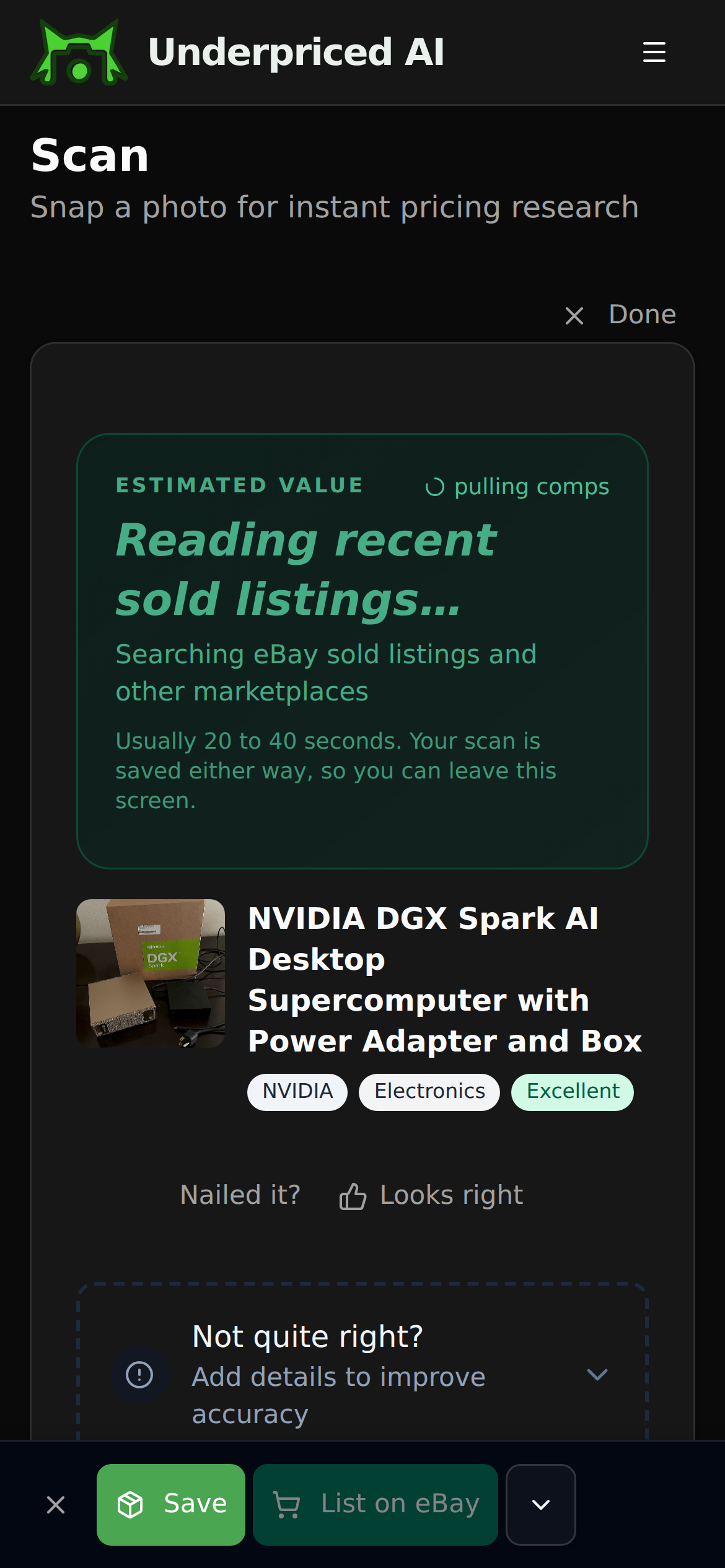
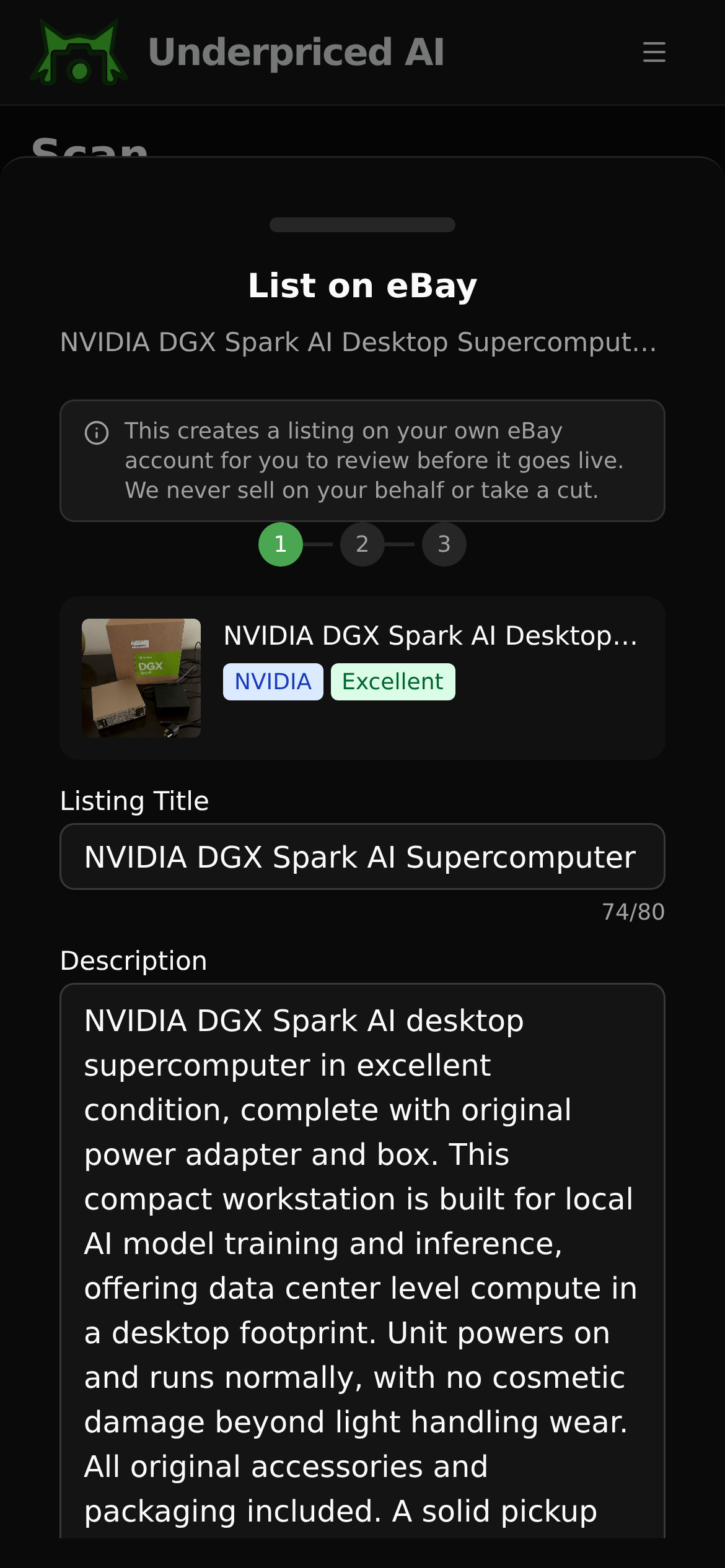
Photograph an item and Underpriced AI handles the rest in a single flow. It recognizes what you shot, pulls genuine sold comps from eBay, Poshmark, Mercari and category specialists, then writes the listing and publishes it to eBay across 10 markets. Refresh value keeps your prices aligned with the market. Try your first scan free - no card required.
Scan, value, and list, all in one app.
Snap a photo and see real sold prices from eBay, Poshmark and Mercari, then cross-list to all of them in a few taps. Your first scan is free.
Try a Free ScanFree first scan, no credit card required
Founder of Underpriced AI. Building tools for resellers with 30+ years of software engineering experience.
Know a reseller who'd want this?
Related Articles


Ready to find out what your stuff is worth?
Snap a photo and see what it actually sold for, with the real sold listings behind the price. First scan free, no credit card.
1. Photograph it
2. See what it sold for
3. List it
Find our guides useful? Get more of them in Google Search.