
Best Thrift Store Finds to Sell on eBay in 2026
Discover top thrift and estate sale items to flip on eBay in 2026. Focus on vintage, fashion, and electronics with high sell-through rates for max profits.

Why Thrift Flipping on eBay Is Still One of the Best Side Hustles in 2026
Thrifting for profit has never been more competitive, or more lucrative. The secondhand market is projected to hit $350 billion globally by 2028, according to ThredUp's 2025 Resale Report. eBay remains the dominant destination for resellers who want maximum reach and pricing power. The platform's 135+ million active buyers means your vintage Levi's or a stray PlayStation controller can find a buyer within days if you source and list smart.
Profitable flippers know which items to pick up before they touch their cart. Not every $3 thrift score turns into a $50 sale. The best thrift store finds to sell on eBay in 2026 share a few traits: strong 90-day sell-through rates, consistent buyer demand, and enough margin to absorb eBay fees, shipping, and your time.
This guide breaks down the top categories worth hunting in 2026. It covers how to evaluate what you find, and how to build a sourcing routine that actually scales.
The Metric That Matters More Than Sold Price: Sell-Through Rate
Before we talk specific items, let's talk about the number most new resellers ignore: sell-through rate (STR).
Sell-through rate measures what percentage of active listings for an item actually sold within a given timeframe, typically 90 days. An item with a $200 sold price is worthless to you if only 10% of listings move. You'd be sitting on inventory for months.
Here's a simple benchmark:
- 70%+ STR means buy aggressively. These are fast-moving items.
- 40-70% STR means buy selectively. Condition and price matter more here.
- Below 40% STR means proceed with caution. Only buy at a steep discount.
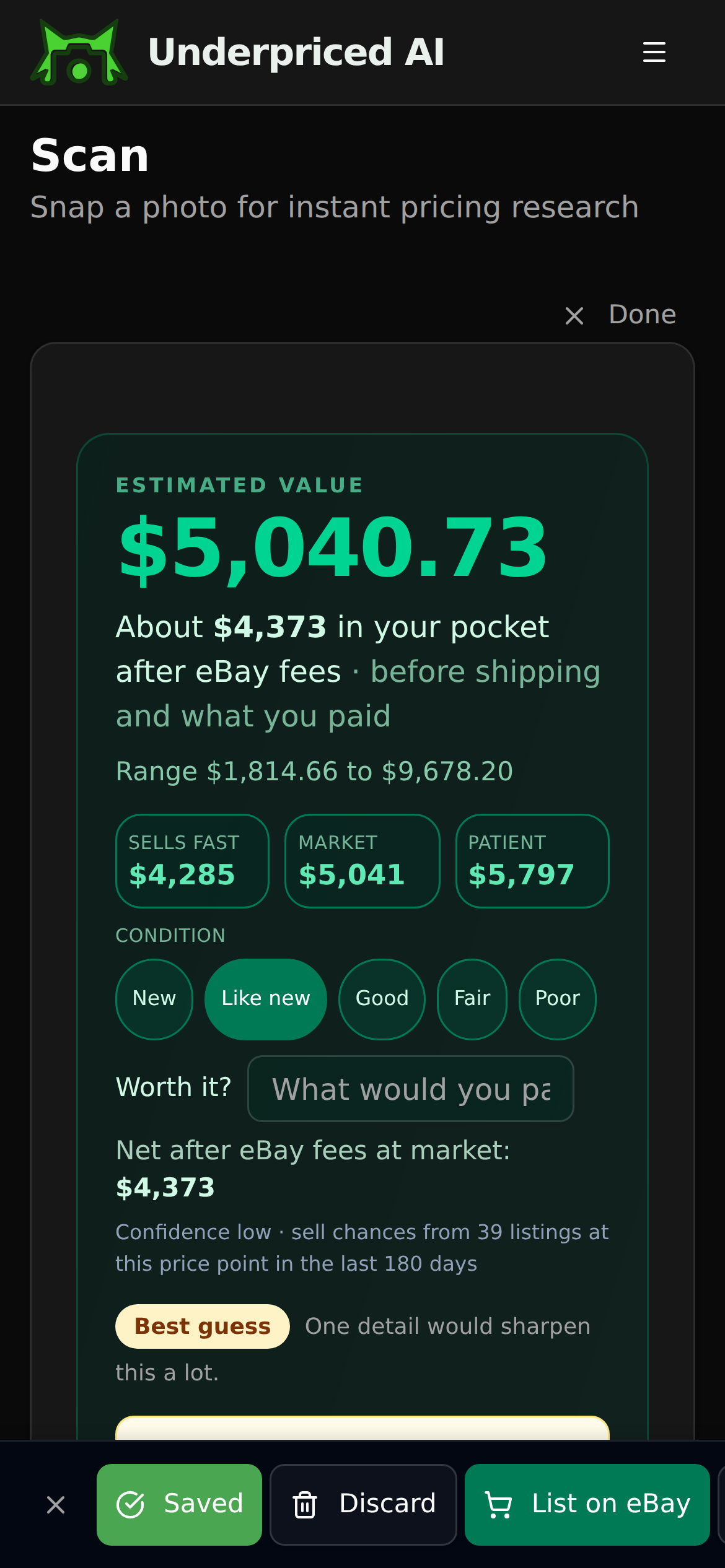
You can pull this data from eBay's Terapeak (free with a seller account). You can also use tools like the Underpriced AI app, which lets you scan items in-store and pull sell-through data instantly. The 30 seconds it takes to check STR before buying can save you from a lot of shelf-sitters. For a deeper look at market research tools, eBay Market Research Tools: Use Terapeak & Competitor Analysis to Find Winners covers the mechanics in detail.
Top Thrift Store Categories to Flip on eBay in 2026
Vintage Fashion and Designer Clothing
This is consistently the highest-volume category for thrift flippers, and 2026 is shaping up to be particularly strong. Y2K fashion, 90s workwear, and 70s-inspired pieces are all commanding premium prices as Gen Z buyers flood secondhand platforms.
What to look for:
- Levi's denim. Specifically 501s, 517s, and any orange tab or big E styles. A pair of orange tab 501s in size 32x32 that cost $6 at Goodwill can sell for $60-$120 depending on wash and condition. Always check the back pocket stitching and interior tag style for dating.
- Band tees and graphic tees. Pre-2000 concert tees from classic rock acts (Rolling Stones, Metallica, Led Zeppelin) regularly fetch $80-$300. Look for single-stitch construction and screen-printed (not heat transfer) graphics.
- Ralph Lauren, Tommy Hilfiger, Nautica from the 90s. Particularly rugby shirts, flag-logo polos, and color-block fleece. The big 90s logos are back in a big way.
- Vintage Nike, Adidas, and New Balance. Deadstock or lightly worn retro silhouettes. A pair of New Balance 990s from the late 90s can clear $200+ if the condition holds up.
- Carhartt workwear. Duck canvas chore coats and bibs, especially in faded or worn colorways. Sellers call this "thrashed Carhartt" and it sells well in the $50-$150 range.
For secondhand fashion, fit photos matter enormously. Measure garments flat and include those measurements in your listing. It dramatically reduces returns. For more on this, Selling Secondhand Fashion Online: Sizing, Descriptions & Profit Tips is worth bookmarking.
Consumer Electronics and Tech Accessories
Electronics are the highest-risk, highest-reward category for thrift flippers. The margin can be extraordinary: a $15 thrift find flipped for $200 is absolutely possible. But condition and functionality verification are non-negotiable.
Hot subcategories in 2026:
- Gaming consoles and controllers. Retro consoles (SNES, N64, original PlayStation, GameCube) continue to appreciate. A clean GameCube with controller can go for $80-$150. Controllers alone, especially OEM Nintendo variants, sell for $30-$60 each. Always test before listing.
- Vintage audio equipment. Receivers, turntables, and speakers from brands like Pioneer, Marantz, Sansui, and Kenwood are in serious demand. A Marantz 2270 receiver thrifted for $40 can sell for $300-$600 on eBay. The vintage hi-fi market is not slowing down.
- Film cameras. 35mm SLRs from Canon (AE-1, A-1), Pentax (K1000), and Minolta (X-700) remain popular with analog photography enthusiasts. A working Canon AE-1 Program typically sells for $80-$180.
- iPods. The iPod Classic (6th gen, 80GB or 160GB) regularly clears $150-$250. It has a cult following, and Apple discontinued the line years ago.
- Vintage calculators and tech gadgets. Texas Instruments graphing calculators (TI-84, TI-89) sell consistently for $30-$80. Nerdy, yes. Reliable, absolutely.
Never list electronics as "working" unless you've tested every feature yourself. Describe what you tested and what you didn't. eBay buyers in this category are savvy and returns can wipe out your margin.
Vintage Kitchenware and Pyrex
The collectible kitchenware market on eBay is deceptively profitable. Casual thrift shoppers walk past this stuff every day. Experienced flippers know better.
Best items:
- Pyrex mixing bowls and casserole dishes. Particularly the primary color nesting sets (yellow, red, green, blue) and rare patterns like Lucky Clover, Gooseberry, and Butterprint. A complete primary color set in excellent condition can sell for $80-$200. Single pieces in rare patterns hit $40-$100+.
- Le Creuset and Staub cast iron. Even chipped pieces have value as parts. A vintage Le Creuset Dutch oven in a discontinued color (flame, dijon) can sell for $100-$300 depending on condition.
- Fire-King and Anchor Hocking. Jadeite and milk glass pieces are steady sellers. Mugs, plates, and restaurant ware in good condition move reliably in the $15-$60 range.
- Cast iron skillets. Specifically vintage American brands: Griswold, Wagner, Lodge (older pieces). A Griswold #8 skillet with a ghost mark can fetch $80-$200.
This category rewards pattern knowledge. Spend an hour on eBay's sold listings studying Pyrex patterns. You'll immediately outperform 90% of other thrift shoppers in your local stores.
Tools, Hardware, and Auto Parts
This is an underrated category for estate sale flips on eBay. Tools are heavy to ship, which deters some sellers. But that friction also means less competition and stronger margins.
What moves well:
- Vintage hand tools. Stanley planes, Disston saws, and older Craftsman USA-made tools. A Stanley No. 4 bench plane in good condition can sell for $40-$120 depending on the vintage.
- Power tools from name brands. Milwaukee, DeWalt, Makita. Even older or partially working units sell for parts. A cordless drill missing its battery can still go for $20-$50 if buyers are hunting parts.
- Auto parts and accessories. This is one of eBay's top categories, period. Vintage car emblems, OEM mirrors, and interior trim pieces for discontinued models serve a passionate buyer base willing to pay. If you're near estate sales or auto swap meets, this is worth learning.
- Vintage advertising and oil company collectibles. Oil cans, gas station signs, and automotive memorabilia cross the line between tools and collectibles, and the prices reflect it. A vintage Sinclair oil can in good condition can easily hit $50-$200.
Books, Media, and Board Games
Lower price points, but fast turns and zero testing required. This category works best for sellers who want volume over margin.
Focus on:
- First edition hardcovers and signed copies. Check copyright pages and signatures carefully. A signed first edition of a popular novel can jump from $2 to $200+.
- Vintage board games (complete sets). First edition Monopoly, Clue, or any game with complete pieces in excellent condition sells well. Always count pieces before buying.
- Criterion Collection Blu-rays and DVDs. These hold their value incredibly well. A Criterion Blu-ray thrifted for $3 can resell for $25-$60.
- Instruction manuals and guides. Original Nintendo game manuals, vintage appliance manuals, and technical documentation have a surprisingly active collector market.
How to Verify Condition and Authenticity Before You Buy
Condition is where most beginner flippers get burned. Here's a practical checklist.
For clothing:
- Check all seams and stitching
- Look for fading, pilling, or undisclosed stains under natural light
- Verify tags are original (look for stitching consistency)
- For designer items, compare hardware, stitching patterns, and label fonts against authentication guides
For electronics:
- Power on the device if possible
- Check for cracked screens, missing buttons, or corrosion in battery compartments
- Look up the model number on eBay sold listings to confirm expected price range
For collectibles:
- Research patterns and maker's marks before buying
- Use the Underpriced AI app to scan items and cross-reference market data on the spot
- Check for chips, cracks, and repairs under strong light. A hairline crack destroys value
For estate sale sourcing specifically, where authenticity becomes more complex, Estate Sales & Thrifting Sourcing Guide: Find Profitable Items to Resell in 2026 goes deep on authentication and negotiation strategy.
Pricing Based on Sold Listings, Not Active Listings
This is non-negotiable. Never price based on what other sellers are asking. Price based on what buyers have actually paid.
Here's the process:
- Search your item on eBay
- Filter by Sold Items in the left sidebar
- Sort by Most Recent to account for current market conditions
- Look at the last 15-20 comparable sales
- Set your price at or slightly below the median sold price to move quickly, or at the high end if your condition is exceptional
Condition grades matter enormously. A "Good" condition item and an "Excellent" condition item of the same product can have 30-60% price differences. Be honest in your condition description. eBay buyers leave feedback, and it affects your entire account's health.
For a full approach to pricing thrift flips, How to Price Thrift Flips on eBay: Maximize Profits in 2026 walks through the methodology.
Building a Consistent Sourcing Routine
Finding one great flip is satisfying. Building a system that produces 20 great flips per week is a business.
Practical sourcing habits:
- Route your thrift stores. Hit the same stores on their restock days (usually Monday/Tuesday for Goodwill). Build relationships with staff who can tip you off to incoming donations.
- Diversify your sources. Thrift stores, estate sales, garage sales, and Facebook Marketplace all have different inventory profiles. Estate sales are particularly strong for electronics and kitchenware. Garage sales are great for tools.
- Set category focus. Trying to flip everything leads to average results in everything. Pick 2-3 categories to become genuinely expert in. You'll spot value faster and make fewer mistakes.
- Track your numbers. Cost of goods, sell price, fees, shipping, and time per item. If a category isn't producing at least 3x return on cost, it might not be worth your storage space.
- Use technology at the point of decision. Apps like Underpriced AI let you scan an item in the thrift store aisle. You get real-time sold pricing and sell-through data before you commit. This eliminates the guesswork that costs new flippers money.
Start With One or Two Categories
Thrifting for profit in 2026 is a genuine opportunity, but it rewards preparation over luck. The resellers pulling consistent income from eBay aren't just finding better stuff. They're making better decisions, faster. They know what sell-through rate to look for, which brands to prioritize, and how to price based on data instead of gut instinct.
Start with one or two categories from this list. Study the sold listings until you can recognize value on sight. Build your sourcing routine around consistency rather than occasional home runs. The best thrift store finds aren't always the flashiest. They're the ones that match strong demand with honest condition and smart pricing.
The Touch Test for Vintage Clothing
Pricing tools and brand guides matter, but speed at the rack matters too. Experienced thrift flippers can identify quality without reading a single tag. The shortcuts:
Feel the fabric weight. Vintage garments are almost always heavier than their modern equivalents. A 1970s wool overcoat carries noticeably more weight than the 2020s version of the same item. A pre-1990s tee feels denser between your fingers than current fast-fashion tees.
Check the buttons. Heavy, well-made buttons (real horn, metal, vintage plastic with weight to it) are a quality signal. Cheap injection-molded buttons are not. Buttons are the easiest 5-second quality check on a rack.
Check the zipper. YKK is the global default. Talon and Coats and Clark are quality vintage indicators, Talon especially for pre-1980s American garments. A no-name plastic zipper on something claiming to be vintage is usually a red flag.
Check the stitching. Single-stitch hems on tees generally indicate pre-1994 manufacture. Chain-stitched seams on denim hems are a strong vintage signal on Levi's. Union labels (ILGWU, ACWA) confirm pre-1980s American manufacturing.
Check the country of origin. Made in USA, Italy, Japan, or England on a vintage piece is usually a quality marker. Made in Vietnam or Bangladesh on a piece claimed to be from the 1970s is a tell. It's a reproduction or much newer than it looks.
These checks together take under 10 seconds per garment. They let you triage a full rack in five minutes instead of forty.
Restock Days, Bag Days, and the Time-of-Day Edge
Thrift inventory follows a rhythm. The flippers who pull consistent income know the rhythm of the stores they work.
The best days to shop are Monday and Tuesday at most Goodwill locations, after the weekend donation backlog has been processed onto the floor. The first week of January (people donating gifts they did not want) and the last week of any month (people moving and dumping) consistently produce above-average inventory.
For the best times, arrive right at store opening for first pick of overnight processing. Try mid-afternoon for items that hit the floor after morning sort. Come just before closing when staff sometimes mark down items that have been sitting.
Watch the color-tag rotation. Most major thrift chains rotate a color-tag discount weekly: pink tags 50 percent off this week, blue next week. Knowing the rotation at your local store turns a $20 jacket into $10 on the right day. Ask staff which colors are discounted that week. This is not insider information, it's posted at the register.
Look for bag day at independents. Smaller church and hospital thrift stores often run a $5 bag-day at month-end where you fill a paper grocery bag for a flat fee. Volume sellers in clothing and books build entire workflows around bag days at two or three local stores.
Build relationships with staff. This is the most underrated thrift-flipping tactic and the one most guides skip. Floor staff and receiving employees see hundreds of items before they hit the floor. If you're a familiar, respectful regular who doesn't haggle aggressively or tear through racks, some of them will mention what's coming in. This is not about asking for favors. It's about being a known and trusted presence in the store.
Income Tiers and What's Realistic
A lot of thrift-flipping content overpromises. Here are honest income ranges based on time invested, assuming you're sourcing competently and listing consistently.
- 5 to 10 hours per week (part-time): $500 to $2,000 per month. Realistic for someone with a day job, sourcing on weekends and listing weeknights.
- 15 to 20 hours per week (serious side hustle): $2,000 to $5,000 per month. This is where most people level up to treating it like a real business.
- 40+ hours per week (full-time): $5,000 to $15,000+ per month. Achievable but requires category expertise, dialed-in workflows, and usually multiple sales channels.
Your actual number depends on category knowledge and time spent listing rather than just sourcing. It also depends on whether you're tracking real ROI (after fees, shipping, and time) or just sale price minus cost.
The flippers who plateau at the low end of each tier almost always have one of three problems. They're sourcing outside their knowledge. They're hoarding inventory instead of listing it. Or they're not pricing aggressively enough to move stale stock.
Manage Stale Listings: End and Sell Similar
What happens after you list matters as much as what you list. eBay's algorithm deprioritizes stale listings. Your visibility quietly drops over weeks even if your price is right.
A simple discipline fixes this. End any listing that hasn't sold in 90 to 180 days and immediately relist it using "Sell Similar." That creates a fresh listing with a new ID, which resets the algorithm clock and gives the item renewed visibility. It also forces you to update the title, refresh photos if you have better ones, and reprice against current sold comps, which shift constantly.
A weekly or monthly audit cadence works:
- 30 to 60 days with no sale: drop the price 10 to 15 percent and enable Best Offer if it's not already on.
- 90 days no sale: end the listing, run new sold comps, relist with revised title and price.
- 6+ months no sale: relist is no longer enough. Pull it, photograph fresh, rewrite the description, and consider cross-listing on Mercari or Poshmark to diversify exposure.
Inventory turnover is the metric that keeps cash flowing. A faster turn at slightly lower margins almost always beats holding out for top dollar on items that sit. Stale listings aren't just dead. They're actively dragging down store visibility on your active listings.
Frequently Asked Questions
Is flipping thrift store finds on eBay still worth it in 2026?
Yes, though it rewards preparation over luck. ThredUp's 2025 Resale Report projects the secondhand market will reach $350 billion globally by 2028, and eBay has more than 135 million active buyers, so demand is there. The difference in 2026 is competition: profitable flippers check sell-through rates and sold comps before buying instead of guessing at the rack.
What profit margin should you aim for on a thrift flip?
Aim for at least a 3x return on your cost after eBay fees, shipping and your time. If a category consistently falls short of that, it probably is not worth your storage space. Realistic examples from this guide: orange tab Levi's 501s bought for $6 selling at $60 to $120, or a $3 Criterion Blu-ray reselling for $25 to $60.
What items should you avoid buying at the thrift store to resell?
Skip anything with a sell-through rate below 40 percent unless the price is steeply discounted, since those become shelf-sitters. Also pass on electronics you cannot test, board games with missing pieces and collectibles with chips or hairline cracks, which destroy value. Underpriced AI lets you scan an item in the aisle on web or mobile to check sold comps first, and your first scan is free.
How can you tell if a piece of clothing is vintage without reading the tag?
Use fabric weight first. Vintage garments are almost always heavier than modern equivalents: a 1970s wool overcoat outweighs its 2020s counterpart, and a pre-1990s tee feels denser between your fingers than fast fashion. Then check buttons, since real horn, metal or weighty vintage plastic signals quality. On tees, look for single-stitch construction and screen printed rather than heat transfer graphics.
Quick-Reference: What's Moving in 2026
| Category | What to Look For | Typical Profit Range |
|---|---|---|
| Y2K and streetwear | Von Dutch, Juicy Couture, FUBU, STARTER team jackets | $30 to $200+ |
| Vintage Nike and Adidas | Retro colorways, deadstock, NB 990s | $50 to $300 |
| Vintage electronics | iPod Classic 80GB/160GB, Game Boy DMG-001, Polaroid SX-70 | $40 to $250 |
| Depression and art glass | Rare Pyrex patterns, signed art glass, Jeanette ultramarine | $30 to $500 |
| Art pottery | McCoy, Roseville, Hull, Weller (signed pieces) | $40 to $400 |
| Sterling silver jewelry | .925 marked, signed makers | $20 to $150 |
| Signed costume jewelry | Trifari, Haskell, Weiss, Schiaparelli | $40 to $300 |
| Vintage books | First editions, signed copies, vintage cookbooks | $25 to $300 |
| Vintage audio | Marantz, Pioneer, Sansui receivers, Technics turntables | $100 to $800 |
| Cast iron | Griswold, Wagner, pre-1990 Lodge | $40 to $200 |
A few specific call-outs worth memorizing. A 1994 Chicago Bulls STARTER jacket in clean condition runs $150 to $300. Juicy Couture velour tracksuits in good shape run $45 to $120 depending on color. Authentic Von Dutch trucker hats (not mall reproductions) run $25 to $80. A Marantz 2270 receiver thrifted for $40 can clear $300 to $600 working. A Macintosh Plus or SE in working order runs $100 to $400. A Polaroid SX-70 in working condition runs $60 to $150.
These numbers shift, sometimes quickly. Run sold comps before you list, not before you read this list.
Scan, value, and list, all in one app.
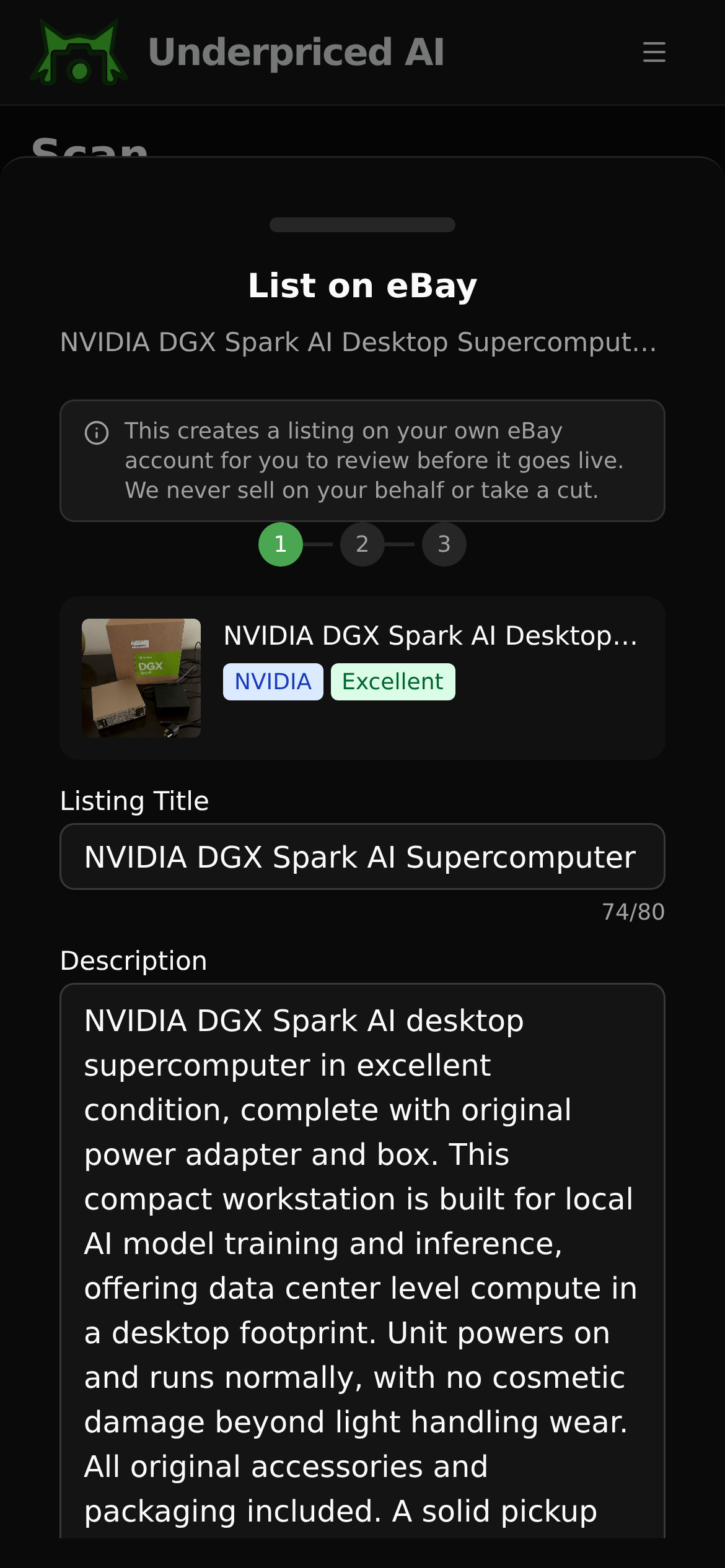
Snap a photo and see real sold prices from eBay, Poshmark and Mercari, then cross-list to all of them in a few taps. Your first scan is free.
Try a Free ScanFree first scan, no credit card required
Founder of Underpriced AI. Building tools for resellers with 30+ years of software engineering experience.
Know a reseller who'd want this?
Related Articles


Ready to find out what your stuff is worth?
Snap a photo and see what it actually sold for, with the real sold listings behind the price. First scan free, no credit card.

1. Photograph it
2. See what it sold for
3. List it
Find our guides useful? Get more of them in Google Search.