
Best Items to Flip for Profit | 50 High-Margin Categories
Discover the 50 best items to flip for profit with high margins. Learn what to source, where to find deals, and how to maximize resale profits in every category.

Finding the best items to flip for profit is the single most important skill a reseller can develop. You might source at thrift stores, garage sales, estate sales, or online clearance racks. Knowing which categories deliver consistently high margins separates profitable flippers from those who waste time on low-return inventory. This guide breaks down 50 high-margin categories organized by niche. Each includes sourcing tips, margin expectations, and what to look for.
If you are just getting started, pair this list with our complete thrift store flipping guide for a full foundation.
Why Some Items Are More Profitable to Flip Than Others
Not every item sitting on a shelf is worth your time. The most profitable items to resell share a few key characteristics:
- High demand with limited supply, like discontinued products, vintage items, and seasonal goods
- Brand recognition, since buyers pay premiums for names they trust
- Easy to ship, since lightweight, durable items protect your margins from shipping costs
- A knowledge gap, since items that require expertise to identify and price correctly mean less competition
Understanding these principles helps you evaluate new categories quickly, even ones not on this list.
Electronics: The Evergreen Flip Category
Electronics consistently rank among the best items to flip for profit. Retail depreciates rapidly and secondhand demand stays strong.
Vintage Video Game Consoles and Cartridges
Retro gaming is a massive collector market. Original Nintendo, Sega Genesis, and PlayStation 1 games can sell for 5x to 50x what you pay at thrift stores. Look for complete-in-box items and uncommon titles rather than the usual sports games.
Typical margin: 100-500%. Source at thrift stores, garage sales, estate sales, and Facebook Marketplace.
Wireless Earbuds and Headphones
Name-brand audio like Bose, Sony, and Beats holds value well. Even used pairs in good condition sell for 40-60% of retail. Check that they power on and both channels work before buying.
Typical margin: 50-150%.
Networking Equipment
Routers, access points, and managed switches from brands like Ubiquiti, Cisco, and Netgear are overlooked at thrift stores but sell quickly online. Business-grade equipment commands the highest premiums.
Typical margin: 100-300%.
Digital Cameras
Older DSLR bodies and lenses remain in demand among hobbyist photographers and filmmakers. Canon and Nikon lenses from the early 2000s are particularly sought after.
Typical margin: 80-200%.
Portable Bluetooth Speakers
JBL, Bose, and UE speakers are common thrift store finds. Test them before buying. A $5 speaker can easily sell for $30 to $60 depending on the model.
Typical margin: 100-400%.
Graphing Calculators
Texas Instruments TI-84 and TI-Nspire calculators are always in demand, especially before back-to-school season. They retail for $100+ and can be sourced for under $10 at garage sales.
Typical margin: 200-500%.
Smart Home Devices
Older model smart speakers, smart plugs, and home automation hubs still sell well. Many people upgrade and donate the previous generation, creating sourcing opportunities.
Typical margin: 60-150%.
Clothing and Fashion: High Volume, High Reward
Clothing is one of the most accessible categories for new resellers. The key is knowing which brands and items command premiums. For platform-specific selling tips, check out our marketplace comparison guide.
Vintage Band and Graphic Tees
Authentic vintage t-shirts from the 70s through the 90s are among the hottest resale items. Concert tees, single-stitch construction, and faded graphics can push values into the hundreds. Learn to identify screen-printed originals versus modern reprints.
Typical margin: 200-1,000%.
Designer Denim
Premium denim from brands like Levi's (especially vintage 501s), True Religion, and selvedge Japanese brands flips reliably. Check for made-in-USA labels and older style numbers.
Typical margin: 100-400%.
Luxury Handbags
Coach, Kate Spade, Michael Kors, and especially brands like Louis Vuitton and Gucci sell quickly on resale platforms. Authentication knowledge is critical here to avoid counterfeits.
Typical margin: 50-200%.
Athletic and Streetwear
Nike, Adidas, Jordan, and limited-edition sneaker releases maintain strong resale values. Deadstock or lightly worn pairs from even a few years ago can appreciate significantly.
Typical margin: 50-300%.
Cashmere and Wool Sweaters
High-end knitwear from brands like Burberry, Ralph Lauren, and Scottish cashmere houses is routinely priced at $5 to $10 at thrift stores. These sell for $40 to $150 online depending on brand and condition.
Typical margin: 200-500%.
Vintage Workwear
Carhartt, Dickies, and vintage Levi's work jackets have become fashion staples. Distressed, broken-in pieces often sell for more than clean ones in this category.
Typical margin: 100-400%.
Hawaiian and Camp Collar Shirts
Vintage aloha shirts, particularly silk or rayon pieces from brands like Reyn Spooner and Tommy Bahama, consistently sell above $30. Rare patterns can exceed $100.
Typical margin: 150-500%.
Home and Kitchen: Overlooked but Lucrative
Many resellers walk right past home goods. That is a mistake. Kitchen and home items are some of the most profitable items to resell because thrift stores price them generically.
Cast Iron Cookware
Vintage Lodge, Griswold, and Wagner cast iron skillets and Dutch ovens are collectible and functional. A $5 skillet can sell for $40 to $300 depending on age and brand.
Typical margin: 200-1,000%.
Pyrex and Vintage Glassware
Colored and patterned vintage Pyrex bowls, casserole dishes, and refrigerator sets have a dedicated collector community. Rare patterns like Lucky in Love or Turquoise Butterprint command triple-digit prices.
Typical margin: 200-800%.
KitchenAid Stand Mixers
Used KitchenAid mixers sell for $100 to $200, even in well-worn condition. They are built to last and buyers know it. These are heavy to ship but the margins justify the cost.
Typical margin: 100-200%.
Le Creuset and Staub Cookware
Enameled cast iron from these French brands retails for $200 to $400. Thrift store prices are usually $10 to $30. Even chipped pieces sell to buyers who want the performance without the retail price.
Typical margin: 200-500%.
Vitamix and Blendtec Blenders
High-end blenders hold value exceptionally well. A used Vitamix fetches $100 to $250 online. Test that the motor runs before purchasing.
Typical margin: 100-300%.
Mid-Century Modern Decor
Lamps, clocks, wall art, and furniture from the 1950s through 1970s are trending. Look for clean lines, teak or walnut wood, and atomic-era designs.
Typical margin: 150-500%.
Dyson Vacuums and Fans
Even non-working Dyson products sell for parts. Functional units command $80 to $250 depending on the model. These are donated frequently and thrift stores rarely price them near market value.
Typical margin: 100-300%.
Sports and Outdoors: Seasonal Gold
Outdoor and sporting goods offer strong margins, especially when you buy off-season and sell during peak demand.
Golf Clubs
Premium brands like Titleist, Callaway, and TaylorMade hold value well. Complete sets, individual drivers, and vintage putters (especially Scotty Cameron) can yield significant returns.
Typical margin: 100-400%.
Ski and Snowboard Equipment
Buy in spring and summer when prices crater at garage sales. Sell in October through December when demand spikes. Name-brand jackets, goggles, and boots move quickly.
Typical margin: 100-300%.
Camping and Hiking Gear
Quality tents, sleeping bags, backpacks, and camp stoves from brands like REI, The North Face, and Osprey sell fast. Outdoor enthusiasts are willing to pay for trusted brands.
Typical margin: 80-250%.
Fishing Reels and Tackle
Vintage and high-end fishing reels from Penn, Shimano, and Daiwa attract both collectors and anglers. Lure collections can be especially profitable when sold individually.
Typical margin: 100-400%.
Exercise Equipment
Dumbbells, kettlebells, weight plates, and brand-name machines like Peloton accessories hold value. The challenge is shipping weight, so local selling platforms work best for heavy items.
Typical margin: 50-200%.
Bicycles and Components
Quality bikes from Trek, Specialized, and Cannondale flip well. Individual components like derailleurs, saddles, and wheelsets can be more profitable per pound than complete bikes.
Typical margin: 80-300%.
Toys and Games: Nostalgia Pays
The toy market thrives on nostalgia, collector demand, and parents searching for specific items. This is a category where knowledge creates serious profit advantages.
LEGO Sets
Complete and sealed LEGO sets appreciate consistently. Retired sets can sell for 2x to 10x original retail. Even incomplete sets with minifigures sell well. Check for retired themes like Star Wars UCS sets and Modular Buildings.
Typical margin: 100-500%.
Vintage Action Figures
Star Wars, G.I. Joe, Transformers, and He-Man figures from the 1980s command premium prices. Loose figures in good condition sell well. Carded figures, sealed on original packaging, can reach hundreds or thousands.
Typical margin: 200-2,000%.
Board Games
Out-of-print strategy games, vintage games with complete pieces, and sealed modern games all have active buyer communities. A $2 thrift store game can sell for $30 to $100 if it is the right title.
Typical margin: 200-1,000%.
Barbie Dolls and Accessories
Vintage Barbie dolls, especially from the 1960s and 70s, attract serious collectors. Holiday editions, limited runs, and dolls in original boxes bring the highest returns.
Typical margin: 100-500%.
Hot Wheels and Diecast Cars
Treasure Hunt and Super Treasure Hunt Hot Wheels are worth $20 to $200 each. Older Redline models from the late 1960s can reach four figures. Learn to spot the subtle differences.
Typical margin: 200-2,000%.
Pokemon and Trading Cards
Sealed product, vintage cards, and even modern chase cards remain strong. Graded cards in high condition command significant premiums. This market fluctuates, so stay informed on current values.
Typical margin: 100-1,000%.
Books and Media: Low Cost, Steady Returns
Books and media are easy to source and often cost under $2 each. The margins are lower per item but the volume makes up for it.
Textbooks
College textbooks, especially in STEM fields, sell for $30 to $150 each. Source them at the end of semesters from donation bins and thrift stores. Check prices before buying since editions change frequently.
Typical margin: 200-1,000%.
First Edition and Signed Books
First printings of popular novels, signed copies, and books from notable publishers hold collector value. Learn to identify first edition indicators for major publishing houses.
Typical margin: 200-2,000%.
Vinyl Records
Classic rock, jazz, and original pressings remain strong sellers. Look for records in VG+ or better condition. Obscure genres like Japanese city pop and early electronic music are trending upward.
Typical margin: 100-500%.
VHS Tapes (Select Titles)
While most VHS tapes are worthless, certain horror films, Disney Black Diamond editions, and obscure titles sell for $20 to $500. This is a niche that rewards research.
Typical margin: 500-5,000%.
Vintage Magazines
National Geographic, LIFE, and specialty magazines with notable cover subjects or events sell to collectors and crafters alike. Complete year runs are especially valuable.
Typical margin: 100-500%.
Vintage and Antiques: The High-Ceiling Category
Vintage and antique items offer some of the highest profit potential but also demand the most knowledge. If you are building skills in this area, our guide to pricing vintage items is essential reading.
Sterling Silver Flatware and Hollowware
Sterling silver has both collector and melt value. Even damaged pieces have a floor price based on silver weight. Learn to identify hallmarks and test for authenticity.
Typical margin: 100-400%.
Vintage Watches
Mechanical watches from Omega, Seiko, Hamilton, and even lesser-known Swiss brands sell well. Non-working watches still have value for parts and restoration. This category rewards patience and study.
Typical margin: 100-500%.
Antique Tools
Stanley planes, vintage hand saws, and quality woodworking tools have both collector and user markets. Rust is not a deal-breaker for serious buyers who restore them.
Typical margin: 200-600%.
Vintage Advertising and Signs
Porcelain signs, tin advertising, and neon signs from the early-to-mid 20th century are highly collectible. Gas station, soda, and automotive brands bring the strongest prices.
Typical margin: 200-1,000%.
Art Pottery
Pieces from Roseville, McCoy, Weller, and other American art pottery makers sell for $20 to $500+. Flip the piece over and learn to read maker's marks. Condition is critical in this category.
Typical margin: 200-800%.
Vintage Jewelry
Costume jewelry from Trifari, Monet, and Sarah Coventry has a strong following. Fine jewelry with precious stones offers even higher margins. A basic loupe and magnet are essential tools for evaluating pieces.
Typical margin: 100-500%.
Niche and Miscellaneous: Hidden Profit Centers
Some of the best items to flip for profit fall outside traditional categories. These overlooked niches have less competition and strong margins.
Musical Instruments
Guitars, keyboards, brass instruments, and even harmonicas sell well. Vintage instruments from brands like Fender, Gibson, and Yamaha command collector premiums. Even student-grade instruments flip for solid returns.
Typical margin: 100-400%.
Sewing Machines and Supplies
Vintage Singer and Bernina machines have dedicated followings. Heavy-duty metal machines from the 1950s through 1970s are preferred over modern plastic models. Specialty presser feet and accessories also sell individually.
Typical margin: 100-300%.
Power Tools
DeWalt, Milwaukee, and Makita cordless tools hold value exceptionally well. Even bare tools without batteries sell quickly. Test functionality before buying and clean them up for photos.
Typical margin: 80-200%.
Medical and Scientific Equipment
Stethoscopes, lab equipment, microscopes, and testing instruments have specialized buyer pools. Welch Allyn and Littmann stethoscopes are common thrift store finds that sell for $40 to $150.
Typical margin: 100-400%.
Pet Supplies and Accessories
Premium pet items like Ruffwear harnesses, elevated feeders, and breed-specific carriers sell well. This is an emotional purchase category where buyers prioritize quality for their pets.
Typical margin: 80-200%.
Printer Ink and Toner Cartridges
Sealed, unexpired name-brand ink and toner cartridges sell at 50-70% of retail. Businesses and individuals constantly need them. Check expiration dates and ensure packaging is intact.
Typical margin: 50-150%.
Quick Reference: Top Categories by Profit Margin
Here is a summary of the highest-margin categories from this list to help you prioritize your sourcing time:
| Category | Typical Margin | Sourcing Difficulty | Best Selling Platforms |
|---|---|---|---|
| Vintage Band Tees | 200-1,000% | Medium | eBay, Grailed, Depop |
| Cast Iron Cookware | 200-1,000% | Low | eBay, Facebook Marketplace |
| LEGO Sets (Retired) | 100-500% | Medium | eBay, BrickLink |
| Vintage Action Figures | 200-2,000% | High | eBay, Mercari |
| Graphing Calculators | 200-500% | Low | eBay, Facebook Marketplace |
| First Edition Books | 200-2,000% | High | eBay, AbeBooks |
| Retro Video Games | 100-500% | Medium | eBay, Facebook Marketplace |
| Cashmere Sweaters | 200-500% | Low | Poshmark, eBay |
| Le Creuset Cookware | 200-500% | Low | eBay, Facebook Marketplace |
| Vintage Watches | 100-500% | High | eBay, Chrono24 |
Tools and Research: Pricing for Maximum Profit
Knowing what to buy is only half the equation. Pricing your items correctly is what actually locks in your profit. Underpricing leaves money on the table. Overpricing leads to dead inventory collecting dust.
Before listing, always research completed sales on the platform you plan to sell on. Look at sold listings, not active ones, since asking prices mean nothing without buyers. For a deeper pricing strategy, read our pricing guide for resellers.
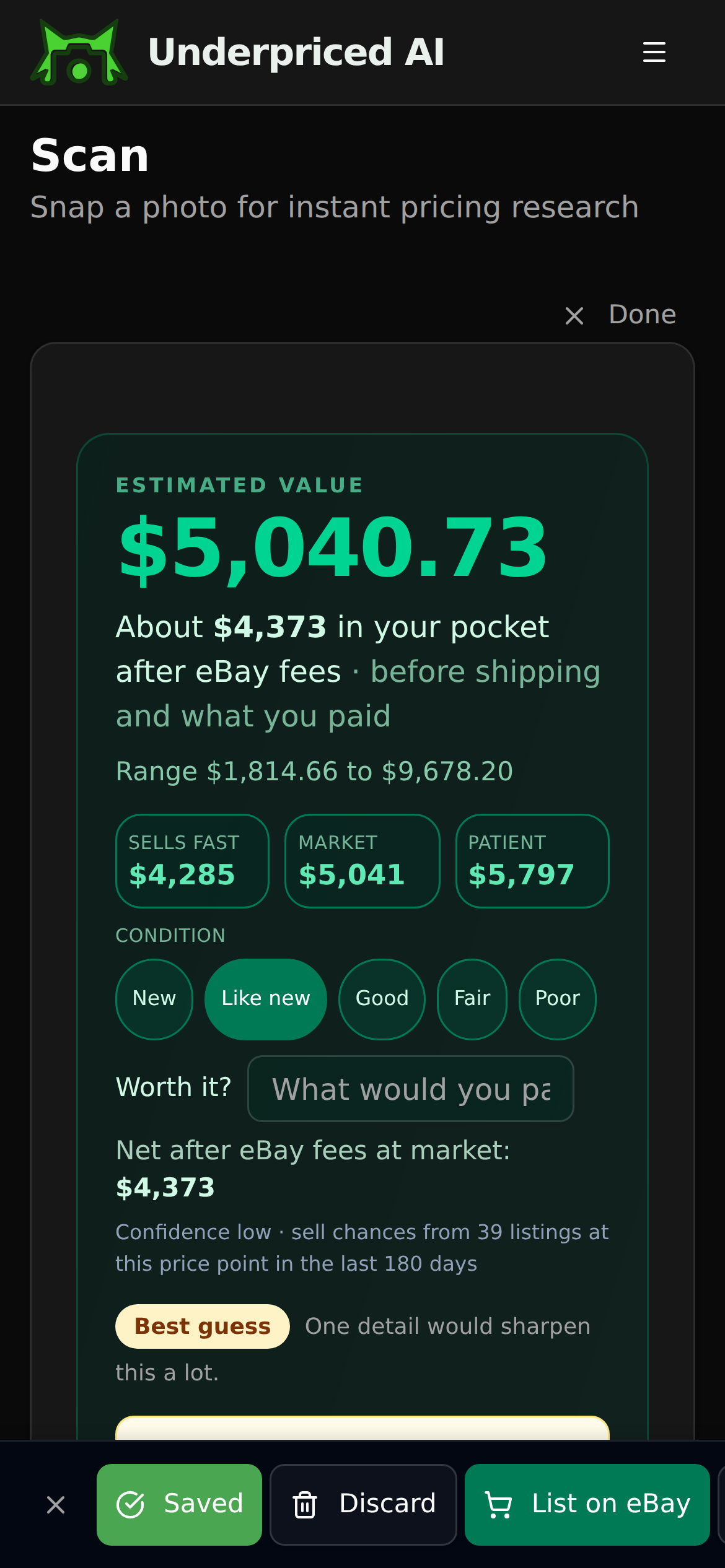
Tools like Underpriced AI can speed up this research significantly. Instead of manually searching comps for every item in a haul, you can scan items and get market values based on actual sales data. This helps most with categories you are still learning, where your gut instinct has not been calibrated yet.
Tips for Maximizing Your Flipping Profits
Regardless of which categories you focus on, these principles apply across the board:
- Specialize in 3 to 5 categories first. Depth of knowledge beats breadth when you are starting. You will spot deals faster and price more accurately.
- Track your numbers. Record what you pay, what you sell for, and the time involved. Some high-margin items take forever to sell, which hurts your effective hourly rate.
- Buy off-season, sell in-season. Winter coats in July, camping gear in January. This is where patient resellers make the biggest margins.
- Condition matters more than brand. A clean, well-photographed generic item often outsells a dirty name-brand piece. Invest in cleaning supplies and good lighting.
- Diversify your selling platforms. Different categories perform better on different marketplaces. Clothing thrives on Poshmark, electronics on eBay, and furniture on Facebook Marketplace.
- Reinvest early profits. Instead of cashing out everything, use profits to buy higher-value inventory. Your average sale price and margins will climb over time.
Frequently Asked Questions
How do I know what a thrift store item is actually worth before I buy it?
Check what identical items recently sold for, not what other sellers are asking. Sold comps show real demand at real prices. Underpriced AI does this from a photo: scan an item on web or mobile and it returns resale value based on eBay, Poshmark and Mercari sold listings. The first scan is free with no card, and credit packs start at $3 for 5 scans.
Which flipping categories are easiest for a total beginner?
Clothing is the most accessible starting point because thrift racks are deep and brand knowledge builds fast. Books and media are also beginner friendly since most cost under $2, so mistakes are cheap. Within electronics, graphing calculators and portable Bluetooth speakers are simple to test and identify. Start with categories you already know something about, then expand as your eye improves.
Are heavy items like stand mixers and exercise equipment worth flipping?
Yes, when the margin covers the freight. Used KitchenAid mixers sell for $100 to $200 even in worn condition, which justifies the shipping cost. Vitamix and Blendtec blenders run $100 to $250. For dumbbells, weight plates and machines, shipping usually eats the profit, so local pickup platforms work better. Test motors and moving parts before you buy.
When should I buy and sell seasonal resale items?
Buy off season and sell at peak demand. Ski and snowboard gear is cheapest at spring and summer garage sales, then sells strongest from October through December. Graphing calculators like the TI-84 spike before back to school, so stock up earlier in the year. Camping and hiking gear follows the opposite curve from winter sports. Storage space is the tradeoff.
Start Flipping: Your Next Steps
You now have 50 proven categories of the best items to flip for profit. The key is to start. Pick two or three categories from this list that match your interests and local sourcing options. Visit a thrift store, garage sale, or estate sale this weekend with fresh eyes. You will be surprised how many profitable items you have been walking past.
As you build experience, expand into new categories and refine your eye for value. Use tools like Underpriced AI to research pricing on items you are unsure about. Reinvest your early profits into building a broader, more valuable inventory. The resellers who succeed long-term treat every sourcing trip as a learning opportunity and never stop expanding their knowledge.
Scan, value, and list, all in one app.
Snap a photo and see real sold prices from eBay, Poshmark and Mercari, then cross-list to all of them in a few taps. Your first scan is free.
Try a Free ScanFree first scan, no credit card required
Founder of Underpriced AI. Building tools for resellers with 30+ years of software engineering experience.
Know a reseller who'd want this?
Related Articles


Ready to find out what your stuff is worth?
Snap a photo and see what it actually sold for, with the real sold listings behind the price. First scan free, no credit card.

1. Photograph it
2. See what it sold for

3. List it
Find our guides useful? Get more of them in Google Search.