
Estate Sale Tips for Resellers | Score Big Deals Every Time
Estate sale tips from resellers who buy every weekend: how to prep, what to grab first, how to negotiate, and how to spot what others walk past.

What Most Resellers Get Wrong About Estate Sales
Estate sales are not thrift stores with better lighting. The psychology is completely different, the competition is sharper, and the window to grab the best stuff can be as short as 90 minutes on a Saturday morning. I've watched new resellers walk into estate sales with no plan, no pricing knowledge, and no system. They walk out with either nothing or a car full of items that won't sell.
The resellers who consistently profit from estate sales aren't lucky. They show up prepared, they know what to look for before they touch it, and they understand that the real money is made in the research, not at the sale itself.
Here's what separates the pros from the people who just wander in.
Before the Sale, Do This or Don't Bother Showing Up
Research Every Sale Listing in Advance
Most estate sales are listed on EstateSales.net or Estatesales.org 3-7 days before they open. Both platforms let you browse photos, and those photos are your research material. Study them like you're preparing for an exam.
Look for:
- Brand names on tags or labels. Even a quick glance at a rack of clothing can reveal designer pieces buried in everyday stuff.
- Furniture maker stamps or dovetail joinery in wood pieces, which signals quality construction.
- Complete sets. Full sets of china, silverware, or glassware sell far better than individual pieces.
- Clutter that hides things. A photo of a messy shelf full of knick-knacks is often where sleeper items live.
Create a shortlist of 3-5 target items per sale. Don't go in wanting everything. That kind of unfocused buying kills margins.
Understand the Sale Structure
Estate sale companies typically run 2-3 day sales. Day one is full price. Day two is often 25-50% off. Day three can be 50-75% off, sometimes "fill a box."
This matters strategically. If you spot a piece on day one that sells for $200 online and they're asking $85, that's a clear buy. But if the item is asking $150 and your research shows it sells for $200, waiting until day two at 25% off ($112.50) might be smarter. That assumes you're not competing with other resellers who'll grab it first.
In highly trafficked sales in metro areas, day one morning is often the only time the best items exist. In rural sales, day two can be a gold mine.
Number Your Queue Spot and Arrive Early
Most estate sale companies hand out numbers or post a sign-up sheet before opening. For popular sales, people arrive 45-60 minutes early. Yes, really. I've waited in a driveway at 7:15 AM for a 9:00 AM opening and still not been first in line.
Bring cash. Many estate sales don't accept cards, and even those that do often have spotty connectivity in older homes.
Inside the Sale, How to Move Through It Fast
The first 20 minutes inside a well-attended estate sale is controlled chaos. You need a system.
Go Straight to Your Target Items First
Hit the items from your shortlist before you browse. Either they're everything you expected and you grab them, or you quickly reassess and redirect.
This prevents you from wandering for 40 minutes and then watching another picker walk out with the vintage Pyrex collection you spotted in the listing photos.
Know Where the High-Value Categories Live
In most estate sales, these categories consistently hide value.
Jewelry cases and dresser drawers: sterling silver often gets mixed in with costume jewelry. Look for hallmarks. A quick scan can reveal pieces with real value. Our silver hallmarks guide breaks down exactly what to look for, from British hallmarks to American sterling stamps.
Bookshelves: first editions, signed copies, and certain niche subject areas (regional history, hunting, woodworking) move well online. Dover Press reprints don't. Learn the difference.
China cabinets and hutches: signed pottery, art glass, and vintage glassware can be sitting right there in plain sight. If you know how to read pottery marks and ceramic backstamps, you can identify a piece of Roseville or Hull worth $80-$400 in seconds.
Garages and basements: tools, cast iron, vintage camping gear, and vintage sporting goods live here. The estate sale company often prices these lower because they're less trained on them.
Clothing and linens closets: this is where the vintage clothing market hides. Union labels, chain stitching, and specific brand tags are clues. A vintage clothing label can tell you exactly when a garment was made and what it's worth before you ever check your phone.
Use Technology to Check Prices in Real Time
This is non-negotiable in 2025. Standing in front of an item with no idea what it sells for, and no way to find out, means you're guessing. Guessing kills margins.
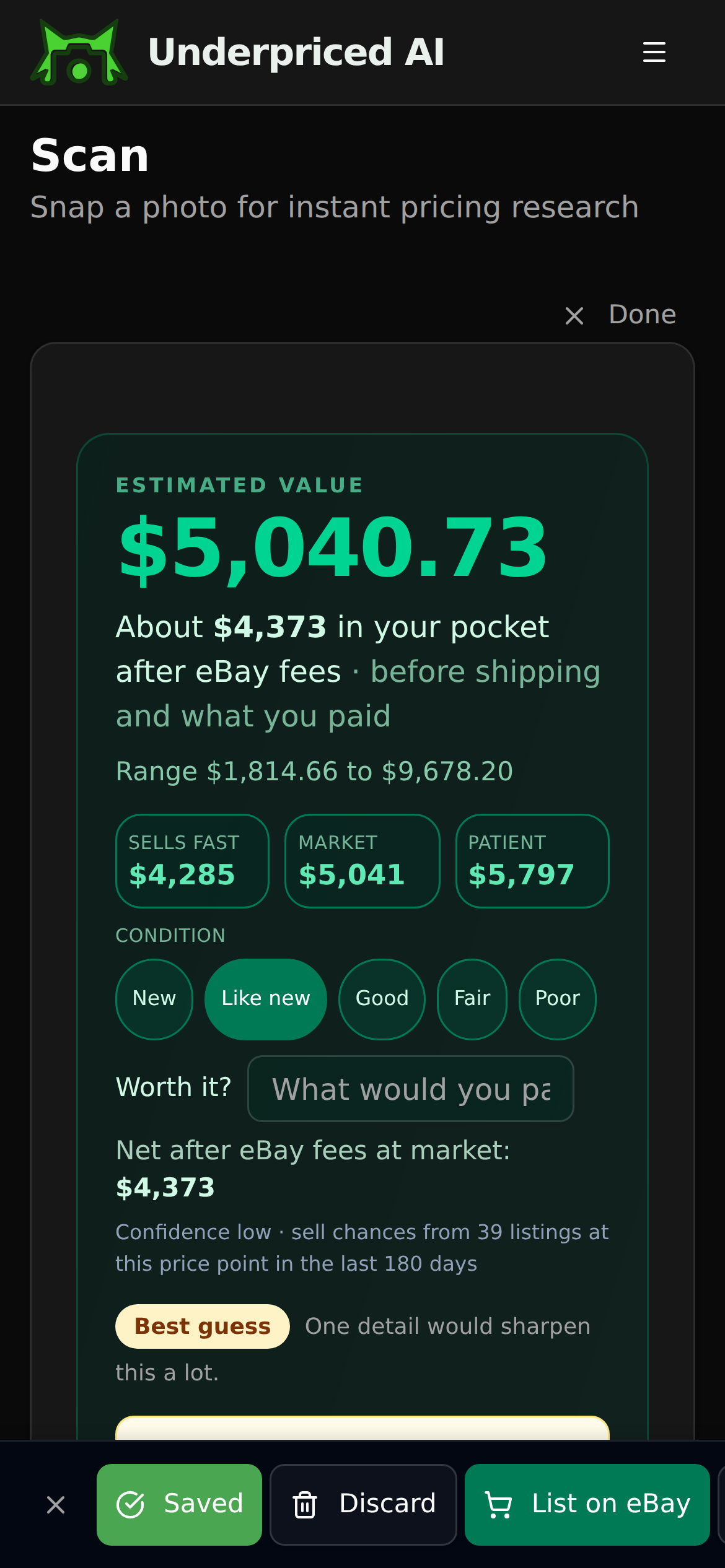
Underpriced AI lets you point your phone camera at an item and instantly pulls comparable sold listings and current market data. That painting you're not sure about, the signed bronze piece with a foundry mark you don't recognize, the piece of art glass: scan it and know within seconds whether it's worth your money. For anything with a foundry mark, you can cross-reference against our bronze foundry marks guide to confirm authenticity before you commit.
Having that data in hand also gives you negotiating power.
Pricing and Negotiation at Estate Sales
Estate sales are more negotiable than most people think, but only if you know how to read the room.
When to Negotiate and When Not To
On day one, during peak morning hours, don't expect discounts. The company is running at full price and there's usually enough buyer competition that they don't need to budge. Making aggressive lowball offers at 9 AM Saturday is a good way to get a polite no and a reputation with the estate sale company.
Day one late afternoon is a different story. If the sale closes at 4 PM and it's 2:30 PM and the item is still there, staff are more open to conversation.
Day two is the sweet spot for negotiation. Many estate sale companies will tell you their markdown schedule upfront if you ask politely. Some will also do "make an offer" pricing on large or awkward items like furniture, collections, and bulk lots.
Bundle to Your Advantage
Instead of trying to negotiate one item down, try bundling. "Would you take $40 for these three pieces together?" often works better than "Would you take $30 for this one?" You're increasing their total transaction value while reducing your per-unit cost. Estate sale staff respond to that framing.
Read the Staff, Not Just the Prices
Some estate sale companies are rigid on pricing. They've built a reputation on it, and their clients, the estate families, expect them to hold firm. Others are more flexible, especially on large collections or items that have sat for two days.
Build relationships with estate sale companies in your area. When they know you're a serious buyer who shows up consistently, pays cash, and doesn't waste their time, you get better treatment. Some companies will actually text repeat buyers early access to photos or let them preview before opening.
How to Identify Items Worth Buying
The knowledge gap is where most resellers either make real money or leave it on the table.
Learn Categories, Not Just Brands
Knowing that "Pyrex is valuable" isn't enough. You need to know which Pyrex patterns command premiums (Pink Gooseberry, Butterprint, Lucky in Love) versus patterns that sell for $5 a piece. Same with vintage glassware broadly. Depression glass, carnival glass, and pressed glass all have different markets, different buyers, and different values.
The same logic applies in every category:
- Pottery: McCoy versus Hull versus Rookwood are three completely different markets.
- Silver: sterling versus silver plate versus nickel silver. Learn the hallmarks.
- Clothing: a 1970s Levi's denim jacket versus a 1990s Levi's denim jacket can be a $150 price difference.
- Tools: vintage Stanley hand planes versus newer cast iron. Condition and model number matter enormously.
Condition Is King, With One Exception
I've passed on beautiful pieces in bad condition and bought ugly pieces in perfect condition. Condition nearly always matters more than aesthetics for resale. Chips, cracks, repairs, and missing parts destroy value in most categories.
The one exception is rare, hard-to-find items where working examples almost don't exist. An early piece of Fulper pottery with significant crazing but a rare glaze can still command serious money because collectors know what they're looking at. But that's category-specific knowledge that takes time to build.
Don't Sleep on "Weird" Items
The items that make experienced resellers the most money are often things other buyers walk past because they don't recognize them. Vintage medical instruments, scientific equipment, obscure mechanical toys, militaria, vintage advertising tins, sewing notions. These categories have devoted collector bases that pay well, and they're chronically underpriced at estate sales because most buyers and many estate sale companies don't know what they're looking at.
The free antique appraisal methods available today make it faster than ever to research strange items on the spot, even if you've never seen one before.
After the Sale, Turning Finds Into Profit
Buying right is only half the job.
Price Based on Actual Sold Data
Listing price and sold price are completely different things on eBay. Always filter by "sold" listings when researching comparable items. A signed piece of pottery might have 40 active listings at $150, but if the sold comps are all at $65-$80, that tells you what the market will actually pay.
Once you've got your pricing research dialed in, eBay pricing strategy becomes about more than matching comps. It's about understanding timing, buyer urgency, and how to position your listing to win.
Don't Underprice Out of Impatience
The most common mistake new estate sale resellers make is panic-pricing, selling something too fast for too little because they want the money now. If you paid $12 for a piece of signed pottery and market data shows it should sell for $95-$120, sitting on it for three weeks is fine. That's an 8x return. It's worth being patient.
Build a tracking system for your inventory, even a simple spreadsheet, so you know your cost basis on every item. Then you can make rational pricing decisions rather than emotional ones.
Consider Where You Sell
eBay reaches the broadest audience for collectibles, but it's not the only answer. Platforms like Poshmark or Depop may be better for vintage clothing. Ruby Lane or Etsy can outperform eBay for certain antiques and art glass. A multi-platform selling strategy often means faster sales and better prices, especially on items with a passionate but niche collector base.
Frequently Asked Questions
What should I bring to an estate sale as a reseller?
Bring cash first. Many estate sales do not accept cards, and even those that do often have spotty connectivity in older homes. Bring your phone for real time price checking, a shortlist of 3 to 5 target items pulled from the listing photos, and a plan for the sale structure. Arriving 45 to 60 minutes early is normal for popular sales.
Is it better to go on day one or day two of an estate sale?
It depends on the market. Day one is full price but the best items usually disappear in the first hours, especially at high traffic metro sales. Day two is often 25 to 50 percent off and is the sweet spot for negotiation. Day three can run 50 to 75 percent off. In rural sales, day two can be a gold mine.
How do I check what an item is worth while standing in an estate sale?
Photograph the item and pull real sold comps on the spot. Underpriced AI turns one photo into sold price data across eBay, Poshmark, Mercari, Facebook, Etsy and Depop, and it works on web or mobile. Your first scan is free with no card. After that, credit packs start at $3 for 5 scans, or you can subscribe.
Where are the best deals hidden at an estate sale?
Check jewelry cases and dresser drawers where sterling gets mixed with costume pieces, bookshelves for first editions and niche subjects, china cabinets for signed pottery and art glass, and garages and basements for tools, cast iron and vintage sporting goods. Estate sale companies often underprice garage and basement items because they are less trained on those categories.
Build Your Estate Sale Sourcing System
The resellers who make consistent money at estate sales aren't just talented, they're systematic. They track which estate sale companies run the best sales in their area. They note which neighborhoods tend to produce better vintage inventory. They keep a running knowledge base of what they've sold, what they've passed on, and what they wish they'd grabbed.
That accumulated knowledge compounds over time. The first six months of estate sale buying feels like a lot of misses and uncertainty. A year in, you start recognizing value faster. Three years in, you walk through a room and the pieces that matter practically glow.
The technology has gotten better too, with scanning tools, pricing databases, and AI-powered identification. The resellers who pair hard-won category knowledge with current market data are cleaning up. Not because the opportunity is new, but because they've stopped guessing and started deciding.
At the estate sale table, know an item's worth before you commit. Underpriced AI takes one photo and returns real sold-comp pricing across eBay, Poshmark, Mercari, Facebook, Etsy, and Depop, each scan running the premium AI model built into every plan. You get the item identified, verified sold prices you can click, and a confident call. Try your first scan free, no card required.
Scan, value, and list, all in one app.
Snap a photo and see real sold prices from eBay, Poshmark and Mercari, then cross-list to all of them in a few taps. Your first scan is free.
Try a Free ScanFree first scan, no credit card required
Founder of Underpriced AI. Building tools for resellers with 30+ years of software engineering experience.
Know a reseller who'd want this?
Related Articles


Ready to find out what your stuff is worth?
Snap a photo and see what it actually sold for, with the real sold listings behind the price. First scan free, no credit card.

1. Photograph it
2. See what it sold for

3. List it
Find our guides useful? Get more of them in Google Search.