
Can ChatGPT Tell You What Your Item Is Worth? (2026)
ChatGPT can identify an item but cannot pull live sold prices, so its estimate is often far off. What it does well, where it fails, and what works.

ChatGPT can help you identify an item and explain what drives its value. But it cannot tell you what your item actually sold for last week. It does not pull live completed-sale data, so any price it gives is an educated guess. That guess can be off by a lot, especially on collectibles, vintage pieces, and anything where condition or edition swings the value. For a number you plan to act on, use a tool that shows real recent sold comps, like Underpriced AI. It identifies the item from a photo and backs the value with completed eBay sales, plus Poshmark, Mercari or Grailed for the categories that sell there. The smart move is to use both: ChatGPT to understand the item, a sold-comp tool to price it.
Updated August 2026: Reflects current ChatGPT behavior with and without web browsing, and how it compares to a photo-to-sold-comps workflow. Underpriced AI pulls real eBay sold comps on every scan, adds Poshmark, Mercari or Grailed sales for the categories that sell there, and runs on the premium AI model included on every plan.
You found something in a closet, or you are standing in a thrift aisle holding a mug with a mark you do not recognize. ChatGPT is right there on your phone, so you ask it what the item is worth. It answers instantly, confidently, with a number. The question is whether you can trust that number enough to buy the item, or to price it when you sell.
The honest answer is: sometimes, for rough curiosity, yes. For a decision with real money on it, not on its own. Below is exactly what ChatGPT does well, where it falls short on pricing, and how to combine it with a sold-comp tool. That way you get both the understanding and the number.
What ChatGPT is genuinely good at
ChatGPT is a strong research and identification partner. Give it a clear photo or a good description and it will often name the item, the maker, the likely era, and the details that matter. Ask it why one version is worth more than another and it will explain the factors: a first pressing versus a reissue, a signed piece versus unsigned, original packaging versus loose, a key date versus a common one.
It is also useful for the reasoning around a sale. It can draft a listing title and description, suggest which category to list under, explain shipping tradeoffs, and walk you through what to photograph. For learning a category you are new to, it is genuinely helpful.
None of that is pricing, though. Knowing what an item is and knowing what it sells for are two different problems. ChatGPT is far stronger on the first than the second.
Where ChatGPT falls short on price
The core issue is data. A real resale value comes from completed sales: what actual buyers actually paid for the same item recently. ChatGPT does not have a live feed of completed sales.
Without web browsing, ChatGPT answers from its training data. That data has a cutoff date and does not include last week's sold listings. It is recalling general patterns, not current prices. Markets move, and a number from stale training data can be well off the current one.
With web browsing turned on, ChatGPT can search the live web, which helps for identification and context. But what it surfaces is mostly articles and active listings, not a clean, filtered set of completed sold prices. It does not reliably apply the sold or completed filter, pull dozens of matching sales, and average them the way a pricing tool does. So even at its best, the price is assembled from what is being asked, not what has been paid.
That distinction is the whole game.
Asking prices are opinions, sold prices are facts
Anyone can list an item for any price. A vintage lamp might be listed at $500 by five hopeful sellers, while every one that actually sold went for $75. If your value comes from those active listings, you will think the lamp is worth $500. If it comes from completed sales, you will know it is worth $75.
This gap is widest exactly where it matters most: collectibles, pottery, glassware, vintage clothing, trading cards, and anything where a small detail changes the price. In those categories, asking prices and sold prices diverge wildly. A guess anchored to listings rather than sales will steer you wrong. A tool that shows the real completed sales behind a number lets you see the truth and click through to verify it yourself.
When a ChatGPT estimate is fine, and when it costs you
Use ChatGPT freely when the stakes are low. You are just curious what an old gift might be worth, you want to understand a category, or you are sanity checking whether something is worth $5 or $500. A ballpark is enough.
Be careful when money rides on the number. If you are deciding whether to buy an item to resell, a guess that is 40% high can turn a good flip into a loss. If you are pricing something to sell, a guess that is 40% low leaves real money on the table, and a guess that is too high means it sits unsold. At the point of a buy or sell decision, you want the actual sold comps, not an estimate.
The workflow that actually works
The two tools are complements, not rivals. Here is the combination resellers and declutterers use:
- Identify and understand with ChatGPT. Figure out what the item is, the maker, the era, and what details drive its value. Learn what to look for and what to photograph.
- Price with real sold comps. Run the item through a tool that pulls completed sales, so your number is grounded in what buyers actually paid, not what sellers hope to get.
- List and sell. Use the sold-comp price to set your listing, and cross-list where your buyers are.
Underpriced AI is built for the middle step, and it folds in the third. You photograph the item, it identifies what it is, and it prices that specific version against real eBay sold comps, plus Poshmark, Mercari or Grailed sales where the category sells there, with clickable links so you can verify every comp. It runs on a premium AI model, the same class of model behind ChatGPT, but pointed at a purpose-built pricing job with live sold data behind it. When you decide to sell, it generates the listing and publishes directly to eBay across 10 country sites. It can also fill the create-listing form on Poshmark, Mercari, Facebook Marketplace, Depop, and more through a free desktop browser extension that fills the form for you to post, and never sees your marketplace passwords.
Your first scan is free, credit packs start at $3 for 5 scans, and plans start at $5 a month. So you can test it on an item whose value you already know and see whether it lands where you expect.
Get real sold prices inside ChatGPT
You do not have to leave the chat to get the sold comps. Underpriced AI runs as a connector (an MCP server) that ChatGPT can call. Ask what a Pyrex Butterprint 403 bowl sells for, and instead of guessing, ChatGPT calls our tools and gets the recent eBay sold listings behind the number, the median and range, three list prices, and what you keep after eBay fees.
To add it you need ChatGPT on the web with a Plus, Pro, Business, Enterprise or Edu plan. Turn on developer mode in ChatGPT's settings, create a custom app, and paste the URL from our AI assistants page. OpenAI labels developer mode as elevated risk, so read its warning before you switch it on. In Claude, the same URL works as a custom connector on any plan, the free one included.
Without an account you get a few text prices and sold-comp lookups a day, eBay US in dollars. Pricing from a photo, saving the scan and preparing an eBay draft need an Underpriced AI account, and they use your plan scans or credits like any other scan. One limit worth knowing: ChatGPT cannot pass the photo you upload in the chat to our tools, so it describes the item in words. The more precise the description (maker, model, pattern, size, condition), the better the price.
Now one tap in Claude too
Since I wrote this, the connector has landed in the Claude Connectors Directory: https://claude.ai/directory/underpriced-ai
That changes the answer to the question in the title for Claude users. Open the listing, click Add, and the next time you ask Claude what a thrift find is worth, it calls Underpriced AI and comes back with an estimate, a range, the recent eBay sales behind the number, three list prices with a sell chance, and what you'd keep after fees. The comps-backed estimates come from real eBay sold listings, not from what the model remembers.
Pricing from a description and looking up sold comps works without an account, a few times a day. Pricing from a photo and drafting an eBay listing needs you signed in, because those run on your account and use your scans. Nothing is published or charged from the chat. The draft waits in the app until you've checked it.
The ChatGPT path above still works exactly as written. The guide for all three, Claude, ChatGPT and Claude Code, is at https://underpricedai.com/mcp
FAQ
Can ChatGPT tell me what my item is worth?
It can give you an educated guess and it is great for identifying the item and explaining what drives its value. But it does not pull live completed-sale data, so the number can be off, especially on collectibles and vintage pieces. For a price you plan to act on, use a tool that shows real recent sold comps.
Why is ChatGPT's price estimate sometimes wrong?
Without web browsing it answers from training data that has a cutoff date and does not include recent sales. With browsing it mostly finds articles and active listings, which are asking prices rather than completed sales. A real value comes from what buyers actually paid, which ChatGPT does not aggregate the way a pricing tool does.
Is there a better way to price an item from a photo?
Yes. Underpriced AI identifies the item from a photo and prices that specific version against real eBay sold comps, plus Poshmark, Mercari or Grailed where the category sells there, with links to each comp so you can verify it. Your first scan is free.
Should I use ChatGPT or a pricing app?
Use both. ChatGPT is excellent for identifying the item and understanding the category. A sold-comp tool gives you the number to act on. Identify and learn with ChatGPT, price and list with a tool built on completed sales.
What is the difference between asking prices and sold prices?
An asking price is what a seller hopes to get. A sold price is what a buyer actually paid. The same item can be listed at $500 and sell for $75, so only completed sales tell you real value.
Stop guessing at prices. Underpriced AI turns one photo into a price from real eBay sold comps, every scan on our premium AI model. Identify the item, see verified sold prices you can click, and decide with confidence. Try your first scan free, no card required.
Scan it, value it, list it, all in one app
An instant value from real eBay sold listings you can open, one-tap listing to eBay, and a browser extension that fills the form on Poshmark, Mercari and more. Your first scan is free.
Founder of Underpriced AI. Building tools for resellers with 30+ years of software engineering experience.
How this was made: drafted with AI from our own sold-listings data and the sources cited, and published by Frank for Underpriced AI. Spot something wrong? Tell us and we'll fix it.
Know a reseller who'd want this?
Related Articles


Ready to find out what your stuff is worth?
Snap a photo and see what it actually sold for, with the real sold listings behind the price. First scan free, no credit card.
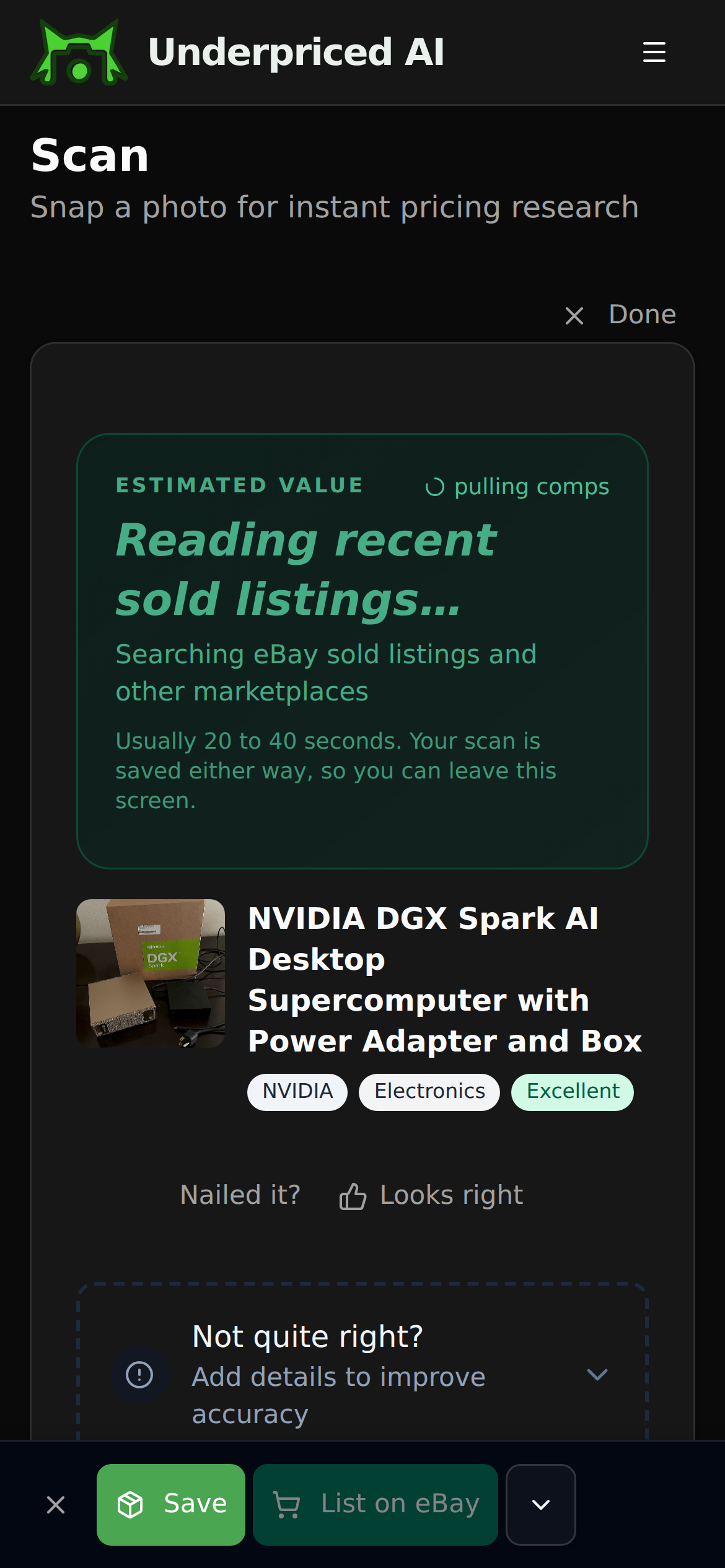
1. Photograph it
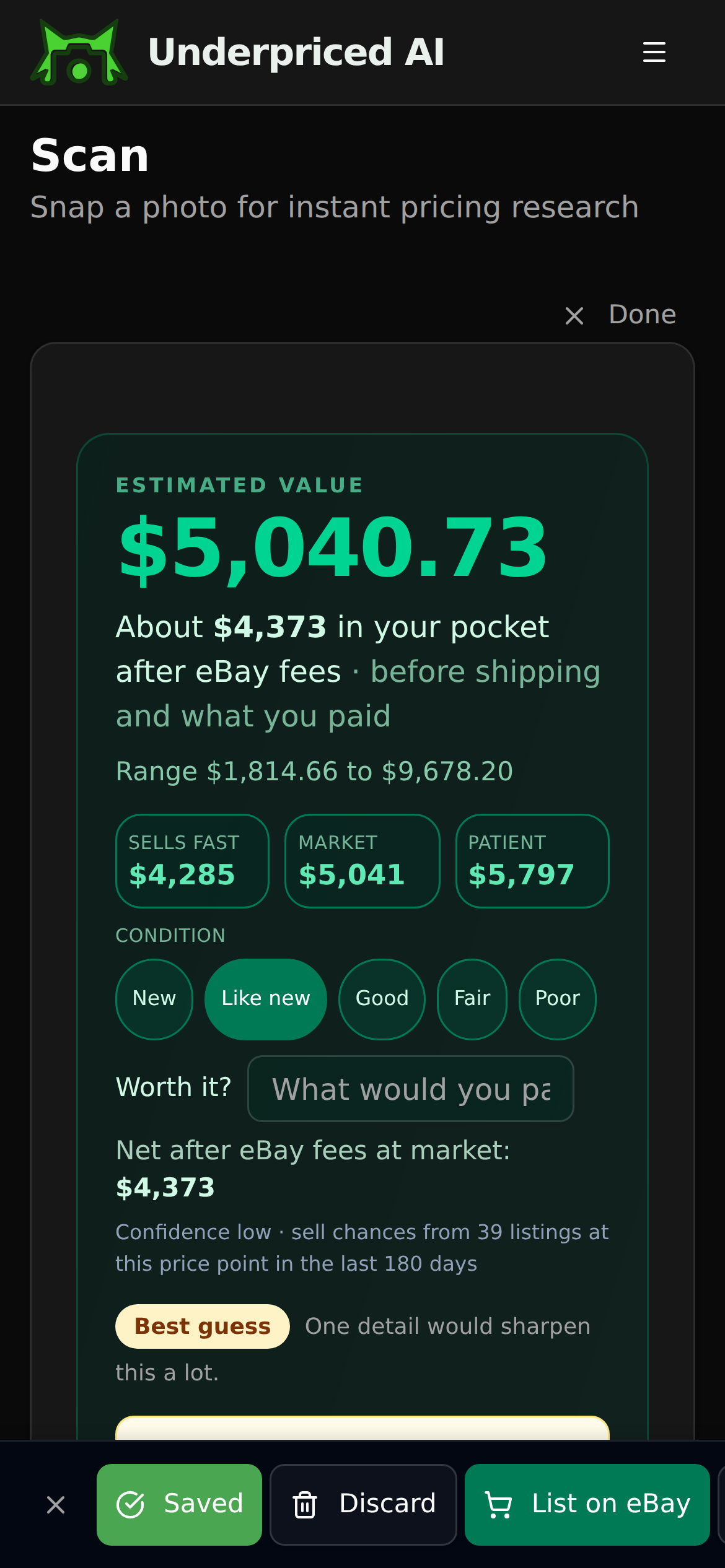
2. See what it sold for
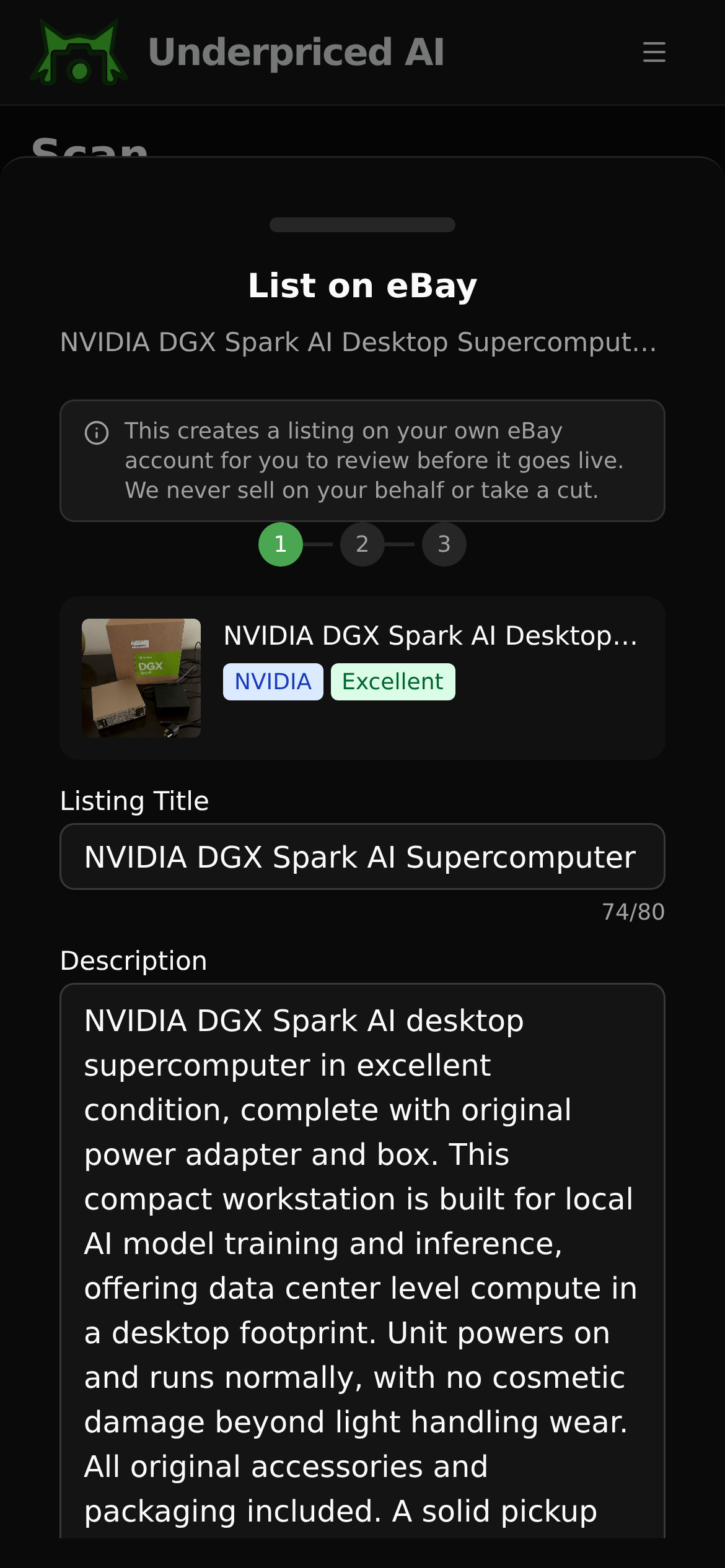
3. List it
Find our guides useful? Get more of them in Google Search.