
Garage Sale Flipping | Find Profitable Items Every Weekend
Garage sale flipping that pays: planning a route, spotting value fast, negotiating without insulting anyone, and turning weekend finds into profit.

Garage sale flipping is one of the most accessible ways to start a reselling business or supplement your sourcing routine. Every weekend, thousands of households put out items priced to sell fast. The resellers who show up prepared walk away with inventory that can sell for five, ten, or even fifty times what they paid. This guide covers everything from planning your route to pricing items on the spot.
Why Garage Sales Are Worth Your Weekend
Unlike thrift stores or retail arbitrage, garage sales offer a sourcing experience with almost no middleman. Sellers are individuals who want items gone, not retailers trying to maximize margins. This means pricing is inconsistent, negotiation is expected, and the best deals go to those who show up early and know what to look for.
Garage sales also give you the chance to see items in context. A box of old cameras sitting next to darkroom equipment suggests a serious photographer, which means the gear is more likely to be high quality. A table of well-maintained power tools in an organized garage hints at someone who took care of their belongings. These context clues do not exist on a thrift store shelf.
Garage Sales vs. Estate Sales
If you have read our estate sale buying guide, you know that estate sales tend to have higher-value items with more structured pricing. Garage sales are the opposite end of the spectrum: lower average price points, faster transactions, and more room to negotiate. The best weekend resellers hit both.
Planning Your Garage Sale Route the Night Before
Successful garage sale flipping starts before you leave the house. Random driving around neighborhoods hoping to spot signs is a losing strategy. Instead, build a targeted route the evening before.
Where to Find Listings
- The Craigslist garage sale section is still one of the most reliable sources, especially for multi-family and neighborhood-wide sales.
- On Facebook Marketplace, filter by "Garage Sale" in your area. Photos in the listing are a good sign.
- Nextdoor neighborhood-specific posts often include detailed item lists.
- Yard sale apps like Garage Sale Finder and Yard Sale Treasure Map plot sales on a map for easy route planning.
- Local newspaper classifieds still attract older sellers who list the best stuff.
What to Prioritize in Listings
Not all garage sales are created equal. When scanning listings, look for these signals:
- Estate-type garage sales use phrases like "everything must go," "downsizing," or "moving sale." These indicate motivated sellers with deeper inventory.
- Recently deceased or elderly households often contain vintage and antique items priced well below market value, because the sellers do not know what they have.
- Multi-family sales mean more volume and more chances to find something valuable.
- Listings with photos of electronics, tools, or collectibles are worth prioritizing over vague "household items" descriptions.
- Upscale neighborhoods and higher-income areas tend to have better brands and higher-quality goods.
Building an Efficient Route
Plot your top five to eight sales on a map and create a loop. Start with the sales most likely to have high-value items, not the ones closest to your house. Factor in posted start times. Aim to be at your first sale five to fifteen minutes before it officially opens.
What Time to Arrive at Garage Sales
Timing is one of the biggest debates among garage sale flippers. The straightforward answer: arrive early, but not so early that you annoy the seller.
Most garage sales start between 7:00 and 9:00 AM. Showing up fifteen minutes before the posted time is generally acceptable. Arriving an hour early and hovering in the driveway is not. Sellers who feel pressured may refuse to negotiate or even turn you away.
That said, the early bird absolutely gets the best inventory. By 10:00 AM, the most valuable items at popular sales are usually gone. If you are serious about garage sale flipping, plan to be out the door by 6:30 AM on Saturday.
The Case for Late Arrivals
There is a second strategy worth knowing: showing up in the final hours. Sellers who still have a driveway full of items at 1:00 PM are far more willing to accept lowball offers or bundle deals. You will not get the rare finds, but you can stock up on bread-and-butter inventory at rock-bottom prices.
Best Categories to Look for at Garage Sales
Not everything at a garage sale is worth flipping. Focus your time and attention on categories with consistently strong resale margins.
High-Margin Garage Sale Categories
| Category | Typical Garage Sale Price | Typical Resale Value | Where to Sell |
|---|---|---|---|
| Vintage electronics (receivers, turntables) | $5 - $30 | $50 - $300+ | eBay |
| Power tools (name brand) | $5 - $25 | $40 - $150 | eBay, Facebook |
| Vintage Pyrex and kitchenware | $1 - $10 | $20 - $100+ | eBay, Etsy |
| Video games and consoles | $1 - $20 | $15 - $200+ | eBay, Mercari |
| Brand-name clothing (Patagonia, etc.) | $1 - $10 | $20 - $80 | Poshmark, eBay |
| Cast iron cookware | $2 - $15 | $30 - $150 | eBay |
| Vintage toys (boxed) | $1 - $10 | $20 - $200+ | eBay |
| Quality small appliances | $3 - $15 | $25 - $80 | eBay, Mercari |
Categories That Rarely Flip Well
Save yourself time by skipping these unless you see something truly exceptional:
- Mass-market paperback books are too heavy to ship and too low in value.
- Generic home decor, the kind you see at every sale, has no resale demand.
- Worn-out kids clothing is a pass unless it is a premium brand in great condition.
- VHS tapes are not worth the space, with very few exceptions.
- Incomplete board games lose their resale value once pieces go missing.
How to Spot Valuable Items Quickly at Garage Sales
Speed matters at garage sales. You often have seconds to scan a table and decide what deserves a closer look. Train yourself to recognize these value signals.
Visual Cues That Signal Value
- Pick items up to gauge weight and build quality. Heavy, solid construction usually means higher quality and older manufacturing.
- Flip items over immediately to check brand markings on the bottom. Pyrex, Le Creuset, KitchenAid, and similar brands are easy to spot.
- Items with original packaging, boxes, receipts, or manuals sell for significantly more.
- Patina and age indicators like brass hardware, dovetail joints on furniture, and hand-stitched labels suggest vintage pieces worth researching.
- On electronics and tools, Made in USA or Japan labels often indicate higher-quality manufacturing eras.
The Quick Scan Method
When you arrive at a sale, do a fast visual sweep of the entire layout before picking anything up. Identify the areas with the highest potential: the table with electronics, the shelf of kitchen items, the corner with tools. Then work through those zones systematically. Do not get stuck examining one item while another reseller grabs the real prize from the next table.
For more detail on recognizing valuable vintage pieces, our guide to pricing vintage items for resale covers the key markers and research methods.
Negotiation Tips for Garage Sale Flipping
Negotiation is expected at garage sales, but doing it well is an art. The goal is to pay less while keeping the interaction friendly.
Fundamental Rules
- Always bring cash in small bills. Show up with plenty of ones, fives, and tens. Asking "will you take three dollars?" while holding a twenty works better than you might think.
- Bundle items together. "Would you take fifteen dollars for all five of these?" almost always gets a yes when the individual prices add up to twenty-five or thirty.
- Be friendly first. Compliment the sale, ask about the history of an item, chat for a minute. Sellers give better deals to people they like.
- Never insult the item to justify a lower price. Saying "this is scratched up, would you take less?" puts sellers on the defensive. Simply ask, "Would you take [your price]?"
- Know your walk-away number. Decide the maximum you will pay before you ask. If they counter above it, politely decline and move on.
Timing Your Negotiation
Early in the morning, sellers are optimistic and less likely to accept deep discounts. As the day goes on, flexibility increases. If you see something you want but the price is too high, consider coming back in the afternoon. Just accept the risk that it might be gone.
Pricing Items on the Spot: Making Fast Decisions
The biggest challenge in garage sale flipping is making quick buy or no-buy decisions without your full research setup at home. You are standing in a driveway, the seller is watching, and another buyer is eyeing the same item.
Here is how to handle it. For common categories you flip regularly, you should have baseline price knowledge in your head. You know a working vintage Marantz receiver is worth researching further. You know a complete-in-box Nintendo 64 game is almost certainly a buy at five dollars.
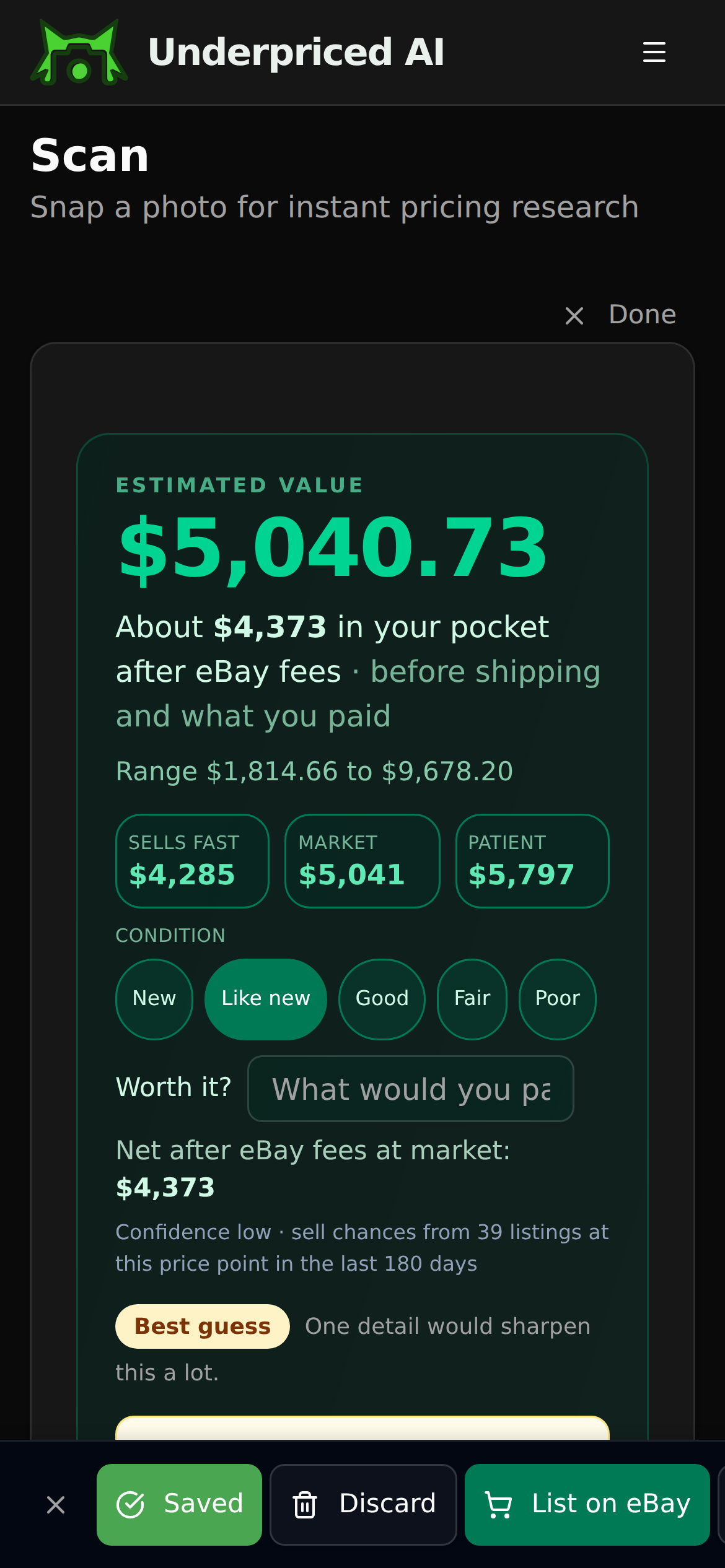
For items outside your core knowledge, a quick check on your phone can save you from expensive mistakes. Tools like Underpriced AI let you snap a photo and get a fast read on what an item is likely worth based on recent sales data. That is exactly the kind of decision support you need when you have thirty seconds to commit. The difference between a profitable flip and a dud sitting in your garage for months often comes down to that one quick price check before you hand over cash.
To build your pricing instincts, our pricing guide for resellers breaks down the research process in detail.
What to Avoid When Flipping Garage Sales
Experience teaches hard lessons, but you can skip some of them by knowing what trips up new flippers.
Common Mistakes
- Buying too much volume. It is easy to load up a car with "deals" that take months to list and sell. Be selective.
- Ignoring condition issues. A small chip, stain, or missing part can cut resale value in half. Inspect everything before buying.
- Skipping the smell test. Smoke damage and mildew are deal-breakers for most buyers and nearly impossible to fix.
- Falling for "it looks old so it must be valuable." Age alone does not create value. Demand does.
- Buying outside your knowledge. Stick to categories you understand until you build expertise in new ones.
- Forgetting about shipping costs. That heavy piece of pottery might be profitable until you factor in the cost of shipping it safely.
Items That Look Valuable but Usually Are Not
- Generic oil paintings and prints (unless by a recognized artist)
- Encyclopedia sets and vintage textbook collections
- Most porcelain figurines (a few brands are exceptions)
- Sewing machines made after 1970 (with some exceptions for industrial models)
- Exercise equipment (heavy, expensive to ship, low demand)
Tracking Your Garage Sale Purchases
Treating garage sale flipping like a business means tracking what you buy, what you pay, and what you sell it for. Without tracking, you cannot know which categories are actually profitable and which ones just feel profitable.
What to Record for Every Purchase
- Date and sale location, useful for identifying your best sourcing areas over time.
- Item description, specific enough that you can match it to a sale later.
- Purchase price, including any bundled items, broken out individually.
- Condition notes, documenting issues at time of purchase so you remember when listing.
- Expected resale value, your estimate at time of purchase, so you can measure your accuracy over time.
Simple Tracking Methods
You do not need complex software to start. A spreadsheet with columns for the fields above works well. Some resellers use a notes app on their phone and transfer data to a spreadsheet weekly. The method matters less than the consistency.
Over time, your tracking data reveals patterns: which neighborhoods produce the best finds, which categories give you the best margins, and which day of the month has the most sales in your area. This data turns garage sale flipping from a hobby into a system.
Building Your Garage Sale Flipping Routine
Consistency separates the resellers who make real money from those who go out once a month and wonder why their results are inconsistent. Here is a weekly routine that works.
The Weekly Garage Sale Schedule
- Thursday evening: scan Craigslist, Facebook, and apps for weekend sale listings. Star the most promising ones.
- Friday evening: finalize your route. Check for any new listings added late. Charge your phone, get cash from the ATM.
- Saturday morning: execute your route from 7:00 AM to noon. Focus on the highest-potential sales first.
- Saturday afternoon: photograph and catalog your purchases. Do detailed research on anything you were unsure about.
- Sunday: hit any remaining sales if your schedule allows, then shift to listing and shipping.
Scaling Up Over Time
As you build knowledge in your target categories, your speed and accuracy at garage sales will improve dramatically. Items you had to research on the spot will become instant-buy decisions. Categories that confused you will become second nature. The key is to stay focused on learning rather than just buying.
Many successful garage sale flippers also source from thrift stores during the week to keep a steady flow of inventory between weekends.
Frequently Asked Questions
How do I find garage sales near me for reselling?
Check the Craigslist garage sale section, Facebook Marketplace filtered by Garage Sale, Nextdoor neighborhood posts, apps like Garage Sale Finder and Yard Sale Treasure Map, and local newspaper classifieds. Scan listings Thursday evening, finalize your route Friday, then plot five to eight sales into a loop. Start with the sales most likely to hold high value items, not the closest ones.
Is it rude to show up before a garage sale officially starts?
Showing up about fifteen minutes before the posted start time is generally acceptable. Arriving an hour early and hovering in the driveway is not, and sellers who feel pressured may refuse to negotiate or turn you away. Most sales open between 7:00 and 9:00 AM, and the best inventory is usually gone by 10:00 AM.
How can I check what an item is worth while I am standing at a garage sale?
Use your phone for anything outside your core categories. Underpriced AI works on web or mobile: snap a photo and get a resale estimate from real eBay, Poshmark and Mercari sold comps, which suits a thirty second buying decision. The first scan is free with no card, then credit packs start at $3 for 5 scans, or you can subscribe.
What should I skip buying at garage sales?
Skip mass market paperbacks, generic home decor, worn out kids clothing, VHS tapes and incomplete board games. Also be careful with items that look valuable but usually are not: generic oil paintings and prints, encyclopedia sets, most porcelain figurines, sewing machines made after 1970 and exercise equipment. Always inspect for chips, stains, missing parts, smoke damage and mildew before paying.
Start Flipping This Weekend
Garage sale flipping does not require a huge investment or years of experience to start. Pick three to five sales from your local listings this Saturday, bring fifty dollars in small bills, and focus on one or two categories you already know something about. Pay attention, take notes, and learn from every purchase, whether it sells for a profit or sits on a shelf.
The resellers who build sustainable income from garage sales are the ones who show up consistently, track their results, and get a little better every weekend. When you need a quick confidence check on an unfamiliar item at a sale, give Underpriced AI a try to help you make smarter buying decisions on the spot. The best flip is the one you researched before you bought it.
Scan, value, and list, all in one app.
Snap a photo and see real sold prices from eBay, Poshmark and Mercari, then cross-list to all of them in a few taps. Your first scan is free.
Try a Free ScanFree first scan, no credit card required
Related value guides
Founder of Underpriced AI. Building tools for resellers with 30+ years of software engineering experience.
Know a reseller who'd want this?
Related Articles


Ready to find out what your stuff is worth?
Snap a photo and see what it actually sold for, with the real sold listings behind the price. First scan free, no credit card.

1. Photograph it
2. See what it sold for

3. List it
Find our guides useful? Get more of them in Google Search.