
Secondhand Designer Fashion: Authenticate, Price and Sell It Well
Secondhand luxury resale: how to authenticate, how to price against real comps, and which platforms pay most for designer and vintage clothing.

The Real Money Is in Getting Authentication Right First
Designer resale is one of the most profitable niches in secondhand selling, but it's also one of the most unforgiving. A single counterfeit item slipping through your inventory doesn't just cost you a sale. It can tank your seller reputation, trigger platform suspension, and expose you to legal liability. Before we talk pricing strategy or platform selection, authentication has to come first.
Authenticated designer pieces consistently command 40-60% of original retail value in the secondhand market, according to ThredUp's 2024 Resale Report. That's a Chanel tweed jacket originally retailing for $4,800 selling for $1,900-$2,900. Get authentication wrong and you've got a $40 return dispute. Get it right and you've got a business.
Authentication Techniques for Luxury and Designer Brands
Hardware, Stitching, and the Details That Counterfeiters Get Wrong
Authentic luxury goods are built to a standard that counterfeiters consistently fail to replicate at scale. Here's what to examine on the most commonly sold designer categories.
Handbags (Louis Vuitton, Gucci, Chanel, Prada):
- LV bags manufactured after 1990 contain date codes stamped inside pockets. The first two letters indicate the factory. The numbers indicate the week and year. Example: "AR0081" = Asnières factory, 8th week of 2001. Any seller claiming a bag has no date code should raise immediate flags.
- Authentic Chanel hardware is heavy, uniformly stamped, and tarnish-resistant. Counterfeit hardware often feels hollow, scratches easily, and shows uneven stamping.
- A classic Chanel 2.55 flap bag has exactly 10 stitches per inch on the exterior quilting. Fake bags rarely maintain this consistency, so count them.
- On authentic Louis Vuitton canvas, the LV monogram never appears cut off at seams and is always symmetrically aligned. The pattern repeats with mathematical precision.
Designer Clothing (Versace, Saint Laurent, Balenciaga):
- Check label font, spacing, and country of origin. A "Made in Italy" tag on a brand known to manufacture in France should prompt deeper investigation.
- Interior seam finishing matters. Luxury garments use flat-felled seams and French seams at stress points. Fast-fashion-quality overlock stitching inside a supposedly $1,200 blazer is a red flag.
- Authentic designer pieces use custom-molded buttons, often embossed with brand names. Replacements should be documented.
Shoes (Louboutin, Manolo Blahnik, Jimmy Choo):
- Louboutin red soles are a specific Pantone shade (Pantone 18-1663 TPX). Fakes often use an orange-red that looks obviously wrong in person.
- Interior stamping should be clean, deep, and correctly spaced. On authentic Louboutins, "Christian Louboutin Paris" appears in a specific serif font. Examine it closely.
Professional Authentication Services Worth Knowing
For high-value pieces where you're uncertain, third-party authentication is worth the $15-$25 fee:
- Entrupy (AI-powered, used by major platforms), handbags and accessories
- Real Authentication, which covers a broader range of luxury categories
- Authenticate First, popular for streetwear and sneakers alongside luxury
Some platforms like Vestiaire Collective and The RealReal build authentication directly into their process. If you're selling independently, an Entrupy certificate attached to your listing can meaningfully increase buyer confidence and justify higher prices.
For a real-world example of how AI-assisted scanning is changing authentication, read about the $45 Gucci heels discovered using Claude Opus scanning. It shows why technology matters in designer sourcing.
Building Your Secondhand Luxury Pricing Strategy
The Four Variables That Determine Value
Pricing secondhand luxury isn't about picking a number between retail and nothing. It's a calculation with four key inputs.
- Condition is the most important factor. A Louis Vuitton Neverfull MM in excellent condition might fetch $700-$850. The same bag with handle darkening, interior stains, and worn corners drops to $400-$500.
- Demand matters. Timeless classics (LV Neverfull, Chanel Boy Bag, Hermès Birkin) hold value exceptionally well. Trend-driven pieces from a designer's less iconic collections may struggle at any price.
- Completeness counts. Does it include the original dustbag, box, authenticity card, or receipt? A Prada bag with full accessories can sell for 15-25% more than the same piece without them.
- Market timing shifts value. Demand for certain brands spikes around fashion month, editorial coverage, or celebrity appearances. Selling a Bottega Veneta Cassette bag when the brand is having a cultural moment matters.
Condition Grading With Industry-Standard Language
Vague condition descriptions invite disputes. Use a consistent grading scale:
| Grade | Description | Value Impact |
|---|---|---|
| New with Tags (NWT) | Unworn, all tags attached | 70-80% of retail |
| Like New (NWOT) | Unworn, no tags | 60-70% of retail |
| Excellent Used | Light use, no visible flaws | 50-65% of retail |
| Very Good | Minor wear, fully functional | 40-55% of retail |
| Good | Visible wear, properly disclosed | 25-40% of retail |
Document everything in photos, a minimum of 8-12 images per designer item. Capture front, back, sides, interior, date codes, hardware close-ups, and any flaws. According to Poshmark's seller resources, listings with 8+ photos sell 30% faster than those with fewer.
Research is critical here. For comparable sold listings to calibrate your pricing, the methodology in our secondhand fashion reselling sourcing and profit guide covers how to benchmark effectively.
Platform Comparison: Where to Sell Designer Pieces
The same Louis Vuitton Speedy 30 in excellent condition can sell for $380 on one platform and $620 on another. Platform selection is a major pricing lever, not a minor consideration. Here's how the major players compare.
Vestiaire Collective
Best for European luxury brands, high-end vintage, Hermès, Chanel, and Céline. Fees run 12-15% seller commission on most items. Authentication is built in for items over $200. The audience is sophisticated luxury buyers, often international. Average sale time is 2-6 weeks, slower, but prices hold higher.
Vestiaire's authentication stamp adds credibility that justifies premium pricing. A Chanel Classic Flap bag will typically achieve 5-10% higher final prices here than on Poshmark, due to audience quality. The tradeoff is slower velocity.
The RealReal
Best for consignment sellers who want hands-off selling, Hermès, fine jewelry, and luxury watches. Fees follow a variable consignment structure, typically 40-55% to the seller. That is lower than it sounds for items that move quickly. Staff authenticators inspect items physically. The audience is established luxury buyers who trust the brand.
The RealReal is worth considering if you have high-volume or high-value inventory and don't want to manage individual listings. The lower payout percentage is offset by zero listing effort and fast payment.
Poshmark
Best for contemporary designer (Kate Spade, Coach, Tory Burch, Michael Kors), accessible luxury, and high-demand streetwear. Fees are a flat $2.95 for sales under $15, and 20% for sales over $15. Posh Authenticate covers luxury items over $500. The audience is broad and deal-seeking, with a strong bargaining culture.
Poshmark rewards active sellers. Sharing your listings multiple times daily directly impacts visibility. Don't list a $1,800 Chanel bag and expect it to sell passively here. It's not the right venue for top-tier luxury.
eBay
Best for rare and vintage designer pieces, sneakers, niche collector items, and buyers who want to bid. Fees are approximately 13.25% for clothing and accessories. The eBay Authenticity Guarantee covers select categories (handbags over $500, sneakers, watches). The audience is massive and diverse, with serious collectors and bargain hunters coexisting.
eBay's auction format can work strongly in your favor for rare pieces with established collector demand. A vintage Versace Medusa print shirt from the early 1990s might achieve $400+ at auction versus $280 fixed-price on other platforms. For more on optimizing your eBay listings, our eBay listing optimization guide covers the title and description strategy that drives search traffic.
Quick Platform Decision Guide
- Hermès and top-tier Chanel: Vestiaire or The RealReal
- Contemporary luxury (Coach, Tory Burch, Vince): Poshmark
- Rare vintage designer and streetwear: eBay
- Watches and fine jewelry: The RealReal or Chrono24
- Maximum reach: cross-list on 2-3 platforms simultaneously
Building Trust Through Transparency
Why Honest Descriptions Are a Profit Strategy
Detailed, accurate condition descriptions reduce return rates by approximately 50%, according to internal data shared by several major platforms at the 2024 eBay Open event. Returns on designer items are disproportionately costly. You lose time, pay return shipping, and risk the item arriving back damaged.
A great designer listing description includes:
- Brand, line, and season if known: "Gucci GG Supreme Canvas Ophidia Small Shoulder Bag, circa 2018"
- Measurements: always include actual measurements, not just stated size
- Condition grade plus specific flaws: "Excellent used condition. Minor pen mark approximately 4mm inside right interior pocket, not visible when bag is open normally. Hardware shows no scratching."
- Provenance if available: "Originally purchased at Nordstrom, receipt included"
- Authenticity documentation: note any serial numbers, date codes, authentication certificates
- What's included: dustbag, box, care cards, straps
Be specific about flaws. Buyers who purchase knowing about a flaw rarely return. Buyers who discover undisclosed flaws always do.
For vintage designer clothing specifically, label identification is a crucial part of authentication and description. Our guide to vintage clothing labels and how to date and price vintage fashion by the tag is an excellent resource for building this skill.
Managing Returns and Disputes on Resale Platforms
The Policy Landscape in 2025
Each platform handles disputes differently, and understanding the rules before you list is essential.
On Poshmark, all sales are final unless the item is not as described or inauthentic. This protects sellers from buyer's remorse returns. It creates disputes when condition wasn't adequately disclosed.
eBay is more buyer-friendly. Sellers with a "no returns" policy can still be forced to accept returns for "item not as described" claims. Your protection is documentation. Photos, condition descriptions, and measurements all become evidence.
On Vestiaire, buyers have 72 hours to flag issues upon receipt. Authentication disputes are handled internally. If you've disclosed accurately, you're generally protected.
The RealReal uses a consignment model, so they manage disputes. Pricing disagreements with their assessment of your item's condition are common.
Proactive Dispute Prevention
- Photograph every flaw before shipping. If a buyer claims damage occurred in transit, you need pre-shipment evidence.
- Use tracked, insured shipping for anything over $200. Add signature confirmation for anything over $750.
- Keep packaging receipts. For high-value items, document the packaging process.
- Respond within 24 hours. Slow responses on disputes always escalate faster than quick, professional ones.
For more on managing returns on vintage fashion specifically, this guide on selling vintage clothing on eBay without returns covers platform-specific strategies that apply equally well to designer items.
Frequently Asked Questions
How can you tell if a designer bag is authentic before buying it?
Check the details counterfeiters get wrong. Louis Vuitton bags made after 1990 carry date codes stamped inside pockets, with two letters for the factory and numbers for week and year. Authentic Chanel hardware feels heavy with uniform stamping, and a classic 2.55 flap has exactly 10 stitches per inch on exterior quilting. On LV canvas the monogram is never cut off at seams.
Is it worth paying for third-party luxury authentication?
Yes for high value pieces where you are uncertain. Third-party authentication typically runs $15 to $25, which is cheap against a return dispute or platform suspension. Entrupy uses AI and covers handbags and accessories, Real Authentication spans broader luxury categories, and Authenticate First is popular for streetwear and sneakers. Attaching an Entrupy certificate to a listing raises buyer confidence and justifies higher pricing.
Which resale platform pays the most for a Chanel or Hermes piece?
Vestiaire Collective or The RealReal for top-tier luxury. Vestiaire charges 12 to 15% commission, authenticates items over $200, and Chanel Classic Flaps typically close 5 to 10% higher there than on Poshmark, though sales take 2 to 6 weeks. The RealReal pays roughly 40 to 55% to the seller but handles listings and disputes. Poshmark suits contemporary designer, not $1,800 bags.
How do I figure out what a used designer item is actually worth?
Price from sold comps, not retail guesswork. Four variables set value: condition, demand, completeness (dustbag, box, authenticity card) and market timing. Excellent used pieces bring roughly 50 to 65% of retail, while good condition with visible wear lands at 25 to 40%. Underpriced AI lets you scan a piece on web or mobile and pull comparable sold prices instantly. The first scan is free, no card.
Authenticate First, Price on Evidence, Describe Honestly, Choose Deliberately
Secondhand designer resale rewards sellers who treat authentication and pricing as skills to develop, not steps to rush through. The sellers who consistently achieve 55-60% of retail value aren't just lucky. They've learned their brands, built authentication habits, written honest listings, and matched their inventory to the right platforms.
The market is also increasingly professionalized. ThredUp's 2024 data projects the global secondhand apparel market reaching $350 billion by 2028. Buyers are more educated, platforms are investing heavily in authentication infrastructure, and the tolerance for vague listings or undisclosed flaws is dropping fast.
If you're sourcing designer pieces from estate sales and thrift stores, where most of the real margins are, authentication knowledge and fast pricing research change everything. Tools like Underpriced AI let you scan a piece in the field and immediately pull comparable sold prices. That helps you make confident buy decisions before you're even back to your car. In a competitive sourcing environment, that speed matters.
The fundamentals don't change. Authenticate first, price based on evidence, describe honestly, and choose your platform deliberately. Do those four things consistently and designer resale becomes one of the most reliable income streams in the secondhand business.
Ready to move that designer bag or dress? Underpriced AI names the piece from a photo, gathers real sold comps from eBay, Poshmark, Mercari and category specialists, then drafts the listing and publishes it to eBay across 10 markets in one flow. Refresh value keeps your prices current. Try your first scan free, no card required.
Scan, value, and list, all in one app.
Snap a photo and see real sold prices from eBay, Poshmark and Mercari, then cross-list to all of them in a few taps. Your first scan is free.
Try a Free ScanFree first scan, no credit card required
Related value guides
Founder of Underpriced AI. Building tools for resellers with 30+ years of software engineering experience.
Know a reseller who'd want this?
Related Articles


Ready to find out what your stuff is worth?
Snap a photo and see what it actually sold for, with the real sold listings behind the price. First scan free, no credit card.
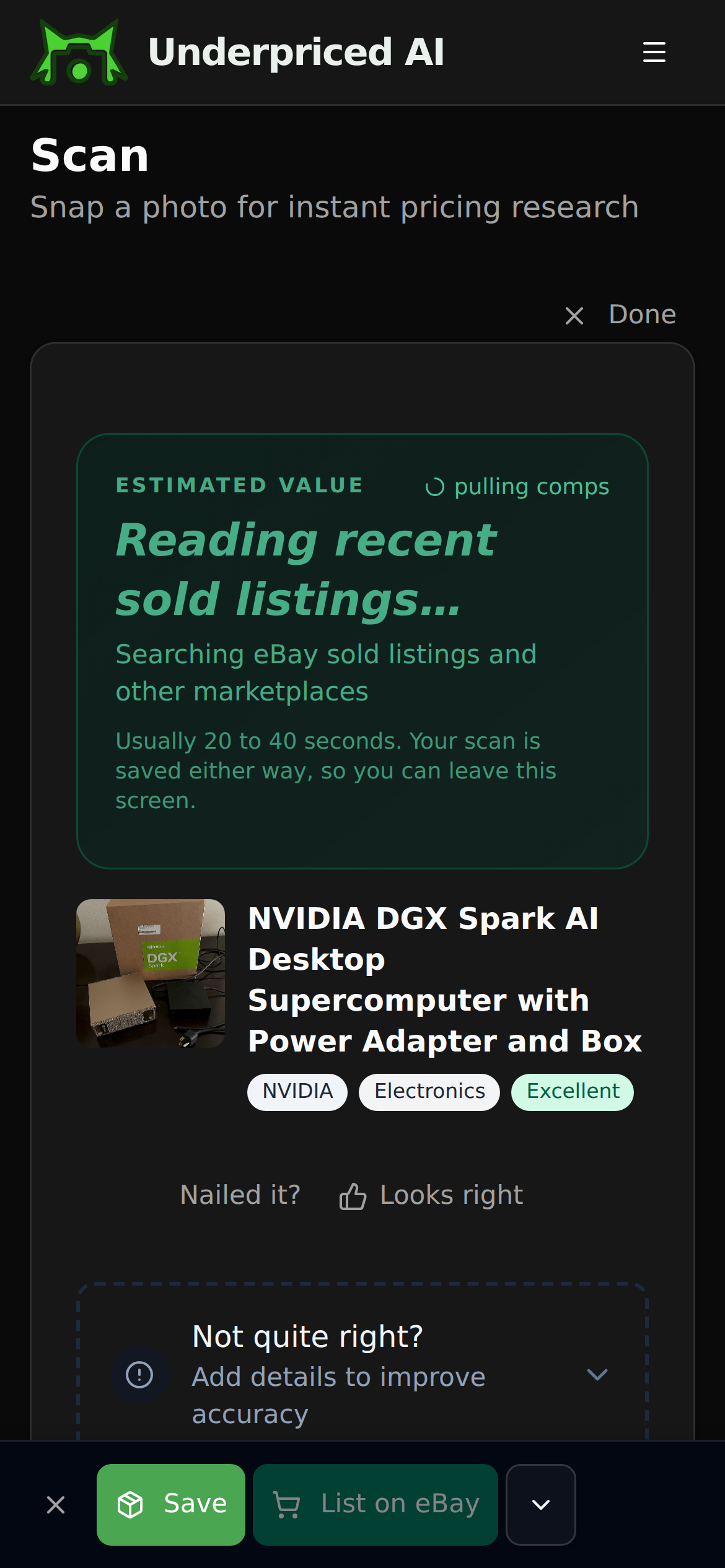
1. Photograph it
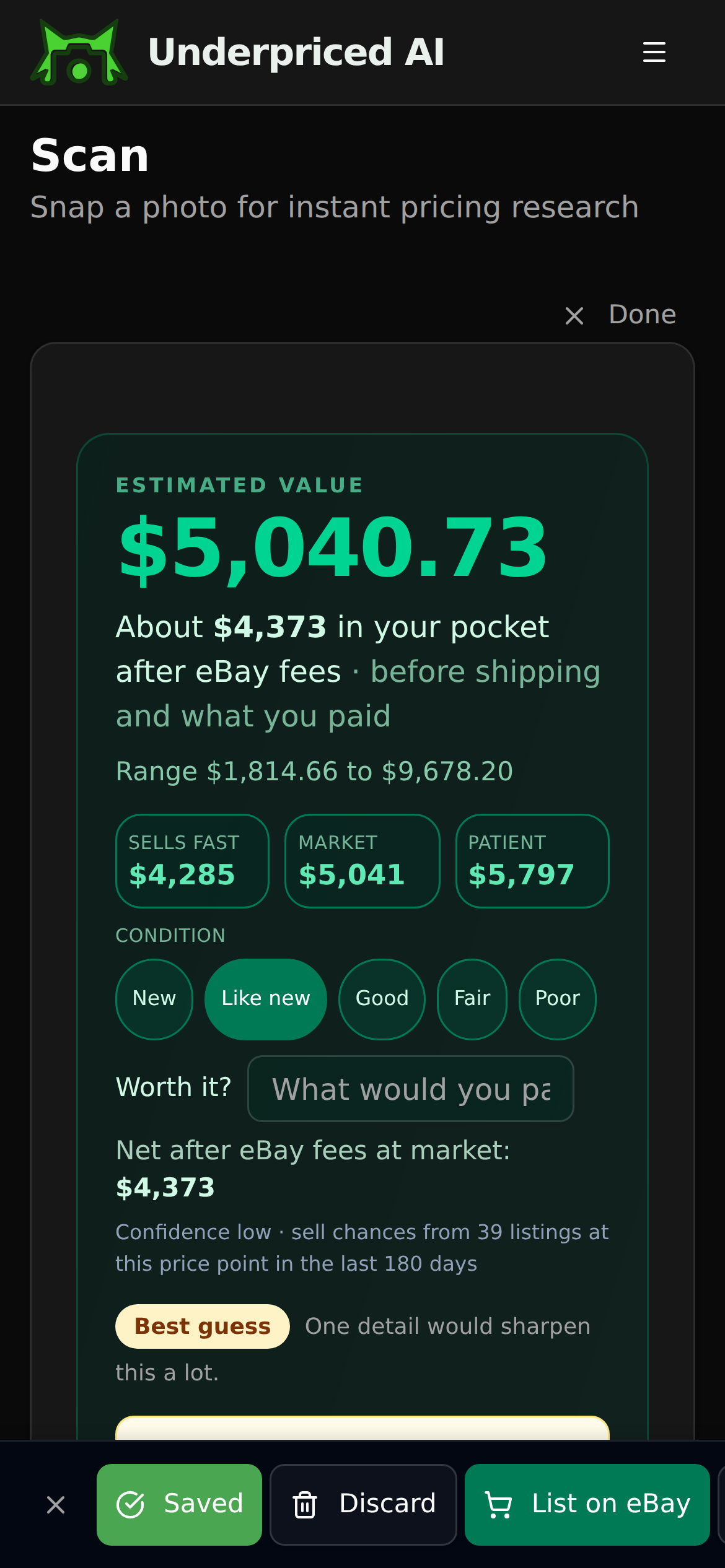
2. See what it sold for

3. List it
Find our guides useful? Get more of them in Google Search.