
How to Start Reselling on eBay | Complete Beginner Guide
Learn how to start reselling on eBay from scratch. This beginner guide covers account setup, sourcing inventory, pricing, listing optimization, and shipping.

Why eBay Reselling Is Still One of the Best Side Hustles
If you have been wondering how to start reselling on eBay, you are in the right place. eBay remains one of the largest and most accessible marketplaces in the world. It has over 130 million active buyers searching for everything from vintage clothing to used electronics. You might want to earn a few hundred dollars a month clearing out your closet, or build a full-time reselling business. eBay gives you the platform to do it. This guide walks you through every step, from setting up your account to shipping your first sale and beyond.
eBay reselling for beginners can feel overwhelming at first. There are listing formats to learn, fees to understand, and sourcing strategies to figure out. But the barrier to entry is remarkably low. You do not need a warehouse, a business license, or thousands of dollars in startup capital. All you really need is a smartphone, some items to sell, and a willingness to learn.
Setting Up Your eBay Seller Account
Before you can list a single item, you need an eBay account configured for selling. The good news is that this takes about ten minutes.
Create Your Account
Head to eBay.com and click "Register." You can sign up with an email address or link your Google or Apple account. Choose a username that sounds professional. Avoid anything too personal or hard to remember. If you plan to build a brand, pick a name that reflects the types of items you want to sell.
Set Up Your Payment Method
eBay uses their managed payments system, which means buyer payments go directly to your linked bank account. You will need to provide:
- Your legal name and address
- A bank account and routing number
- Your Social Security number or EIN (for tax purposes)
- A valid credit or debit card for seller fees
Choose a Seller Plan
eBay offers two main options:
| Feature | Basic (No Store) | eBay Store Subscription |
|---|---|---|
| Monthly fee | $0 | Starting at $7.95/month |
| Free listings per month | Up to 250 | 250-100,000+ depending on tier |
| Final value fee | ~13.25% | ~12.35% (varies by category) |
| Promoted listings discount | None | Lower rates available |
| Best for | Casual sellers | Sellers with 50+ listings |
If you are just getting started, the free account is perfectly fine. You can always upgrade to a store subscription later once your volume justifies the monthly cost.
What to Sell First on eBay
One of the biggest mistakes new resellers make is overthinking their first inventory. You do not need to invest money upfront. Start with what you already own.
Raid Your Own Home
Walk through your house with fresh eyes. Look for:
- Clothing and shoes you no longer wear, especially brand-name items
- Electronics like old phones, tablets, game consoles, and chargers
- Books, particularly textbooks, niche nonfiction, and out-of-print titles
- Collectibles such as trading cards, vinyl records, or vintage toys
- Home goods like small kitchen appliances, tools, and decor
Selling items from your own home serves two purposes. It clears out clutter and gives you risk-free practice with the entire eBay selling process, from photographing items to packing and shipping them.
Identify Profitable Categories
Once you have sold through your personal items, you will want to start sourcing inventory intentionally. Some of the most consistently profitable eBay categories for beginners include:
- Used clothing and shoes (especially athletic brands, denim, and vintage)
- Video games and consoles
- Small electronics and accessories
- Toys and action figures (sealed or vintage)
- Media (DVDs, Blu-rays, CDs in specific niches)
The key is finding items where there is a meaningful gap between what you pay and what they sell for. If you are curious about whether eBay is the right platform for your particular niche, check out our breakdown on whether it is worth selling on eBay for a deeper look at fees, competition, and profit potential.
How to Source Inventory for eBay Reselling
Sourcing is the engine of your reselling business. The better you get at finding undervalued items, the more profitable you become.
Thrift Stores and Garage Sales
Thrift stores like Goodwill, Salvation Army, and local secondhand shops are goldmines for resellers. The trick is knowing what to look for and what to skip. Focus on brands and categories you have researched. Check completed eBay listings to see what items actually sell for, not just what people are asking.
Garage sales and estate sales can be even more profitable because prices are often negotiable, and sellers are motivated to get rid of everything. Arrive early for the best selection, and do not be afraid to make offers on bundles.
For more sourcing strategies, our guide on how to find underpriced items at thrift stores covers specific techniques for spotting hidden value on the shelves.
Online Sourcing
You do not have to leave your house to find inventory. Retail arbitrage means buying discounted items from retail stores to resell. Online arbitrage means buying from one online marketplace to sell on another. Both are viable strategies. Check clearance sections at major retailers, liquidation pallets, and even Facebook Marketplace for local deals.
Wholesale and Bulk Lots
As you scale, buying wholesale or purchasing bulk lots on eBay itself can be a smart move. Look for sellers offloading large quantities of a single product category. Run the numbers carefully to make sure per-unit costs leave you with a healthy margin after eBay fees and shipping.
Pricing Strategy: How to Price Items to Sell Fast and Profitably
Pricing is where many new resellers either leave money on the table or scare away buyers. Getting it right requires research, not guesswork.
Research Completed Listings
The single most important pricing tool on eBay is the "Sold" filter. When you search for an item, click "Sold Items" on the left sidebar to see what buyers have actually paid. Ignore active listings because those are just asking prices and may never sell.
Look at the last 10 to 20 sold listings for your item. Note the average price, the condition of those items, and whether they sold through auction or Buy It Now. This gives you a realistic pricing range.
Factor In All Your Costs
Before setting a price, calculate your true costs:
- Cost of goods, what you paid for the item
- eBay fees, typically 12-13% of the total sale including shipping
- Shipping costs, supplies plus postage
- Payment processing, included in eBay's managed payments fee
A good rule of thumb is to aim for at least a 50% profit margin after all fees and costs. If you cannot hit that number, the item may not be worth listing unless it will sell very quickly.
Tools like Underpriced AI can speed up this research significantly. They scan eBay listings and identify items priced below market value. This is especially useful when you are sourcing inventory and need to make quick buying decisions. For an in-depth look at pricing approaches, see our pricing guide for resellers.
Auction vs. Buy It Now
This is one of the first decisions you will face with every listing:
- Auction is best for rare, collectible, or hard-to-price items where competitive bidding could drive the price up. Start the auction at the lowest price you would accept.
- Buy It Now (Fixed Price) is best for items with clear market value and consistent demand. Buyers can purchase immediately, and you can accept offers below your asking price.
For most beginners, Buy It Now with "Best Offer" enabled is the safest and most predictable approach. It gives buyers flexibility and keeps you in control of your minimum acceptable price.
eBay Listing Optimization: How to Get More Views and Sales
A well-optimized listing is the difference between an item sitting unsold for months and selling within days. This is where you turn sourcing and pricing skills into actual revenue.
Write Titles That Get Clicks
Your eBay title is 80 characters of prime real estate. Use every character wisely:
- Include the brand, model, size, color, and condition
- Put the most important keywords first, since buyers scan from left to right
- Avoid filler words like "wow," "look," or "L@@K." They waste characters and look unprofessional
- Use common search terms that buyers actually type
For example, instead of "Nice Vintage Jacket Great Condition," write "Levi's Vintage Denim Trucker Jacket Men's Large Blue Type III 70s."
Take Photos That Sell
Good photos build trust and reduce returns. Follow these fundamentals:
- Use natural light or a simple lightbox setup
- Shoot against a clean, uncluttered background (white or neutral)
- Capture at least 8 to 12 photos per listing
- Show the item from every angle: front, back, sides, labels, tags
- Photograph any flaws, stains, or damage up close
- Include a photo showing scale if the item's size might be unclear
You do not need an expensive camera. A modern smartphone camera is plenty. Clean your lens, hold steady, and avoid using flash.
Write Detailed Descriptions
Your description should answer every question a buyer might have before they ask it:
- Exact measurements (not just the tag size for clothing)
- Material and construction details
- Condition notes with honest disclosure of any flaws
- What is included (accessories, original packaging, etc.)
- Any relevant history or provenance for collectibles
Our eBay listing optimization guide covers advanced techniques for descriptions, item specifics, and category selection that can push your listings higher in search results.
Fill Out Item Specifics
eBay uses item specifics (brand, size, color, material, etc.) to power its search algorithm. Listings with complete item specifics get significantly more visibility in search results. Fill out every available field, even the optional ones. This is one of the easiest ways to outperform competing listings.
Shipping Basics for eBay Sellers
Shipping is where many new sellers feel the most anxiety, but it becomes second nature quickly. A solid shipping process protects your profits and keeps your buyers happy.
Choose Your Shipping Strategy
You have two main options:
- Free shipping means you build the shipping cost into your item price. Buyers prefer free shipping, and eBay's algorithm tends to favor these listings. Best for lightweight items with predictable shipping costs.
- Calculated shipping means eBay calculates the cost based on the buyer's location and the package dimensions and weight you provide. Better for heavy or oversized items where shipping costs vary widely.
Supplies You Will Need
Stock up on basic shipping supplies before you need them:
- Poly mailers (various sizes for clothing and soft goods)
- Cardboard boxes (assorted sizes for electronics, shoes, and fragile items)
- Bubble wrap and packing paper
- Packing tape and a tape gun
- A kitchen or postal scale accurate to the ounce
- A printer for shipping labels (thermal label printers save time and money long-term)
Save money by reusing boxes and packing materials when they are clean and sturdy. Many stores will give away boxes for free if you ask.
Print Labels Through eBay
Always buy your shipping labels through eBay rather than going to the post office. eBay-purchased labels come with significant discounts on USPS, UPS, and FedEx rates. You also get automatic tracking upload, which is required to maintain seller performance metrics.
Carrier Selection Quick Reference
| Item Type | Recommended Carrier | Why |
|---|---|---|
| Lightweight clothing (under 1 lb) | USPS First Class | Cheapest option for light items |
| Clothing and shoes (1-5 lbs) | USPS Ground Advantage | Best balance of cost and speed |
| Electronics and heavy items (5+ lbs) | UPS Ground or FedEx Ground | Often cheaper than USPS for heavier packages |
| Fragile or high-value items | UPS or FedEx with insurance | Better handling and claims process |
Handling Customer Service and Returns
Building a strong seller reputation on eBay is critical to long-term success. Your feedback score and seller ratings directly affect your search visibility and buyer trust.
Respond Quickly to Messages
Aim to reply to buyer questions within a few hours. Fast responses increase the chances of making a sale and signal to eBay that you are an active, reliable seller. Even a brief acknowledgment while you look up an answer is better than leaving someone waiting.
Have a Clear Return Policy
Offering a 30-day return policy may feel risky, but it actually increases buyer confidence and conversion rates. eBay also rewards sellers who offer returns with better search placement. Most buyers never return items, and the ones who do typically have a legitimate reason.
Handle Problems Professionally
When issues arise, and they will, stay calm and professional. If an item arrives damaged, offer a partial refund or full return. If a buyer claims an item is not as described, review your listing honestly. Protecting your feedback score is worth more than winning any single dispute.
Scaling Your eBay Reselling Business
Once you have the basics down and are making consistent sales, it is time to think about growth.
Track Your Numbers
You cannot scale what you do not measure. Track these key metrics:
- Total revenue and profit per month
- Average profit per item
- Sell-through rate, the percentage of listed items that sell within 30 days
- Cost of goods as a percentage of revenue
- Time spent per listing (sourcing, photographing, listing, shipping)
A simple spreadsheet works fine to start. As your volume grows, dedicated inventory management software becomes worth the investment.
Develop Sourcing Routines
Consistent sourcing is what separates hobbyist sellers from profitable resellers. Set a weekly schedule for visiting thrift stores, checking online deals, and scanning clearance racks. The more items you list, the more sales you generate, and compounding inventory is how reselling businesses grow.
Diversify Your Platforms
eBay might be your primary marketplace, but consider cross-listing on other platforms to reach different buyer audiences. Each platform has its own strengths depending on what you sell. Our comparison of eBay vs. Poshmark vs. Mercari breaks down the pros and cons so you can decide where else your inventory might perform well.
Reinvest Your Profits
Resist the urge to pocket every dollar early on. Reinvesting a portion of your profits into better inventory, shipping supplies, and tools compounds your growth. Many successful full-time resellers started with a few hundred dollars in sourced inventory and grew from there by reinvesting consistently.
Common Mistakes to Avoid When Starting Out
Learning from other people's mistakes saves you time and money. Here are the most common pitfalls new eBay resellers fall into:
- Not researching before buying inventory. Always check sold comps before purchasing items to resell. Gut feelings are unreliable until you have years of experience.
- Underestimating eBay fees. That 12 to 13 percent adds up fast. Price accordingly or your "profits" will disappear.
- Poor photos and vague descriptions. These lead to low conversion rates and higher return rates. Invest the extra five minutes per listing.
- Ignoring shipping costs in your pricing. Shipping is a real cost. Account for it whether you offer free shipping or calculated shipping.
- Listing too few items. Reselling is a numbers game. The more active listings you have, the more consistent your sales become. Aim to list a set number of new items every week.
- Giving up too early. Your first month will be slow. Your second month will be better. Most resellers hit their stride around the three to six month mark.
Frequently Asked Questions
How much money do I need to start reselling on eBay?
Almost nothing. The barrier to entry is low: no warehouse, no business license and no thousands in startup capital. All you really need is a smartphone, some items to sell and a willingness to learn. Start by selling clothing, electronics, books, collectibles or home goods you already own, which clears clutter and gives you risk free practice with listing, packing and shipping.
Do I need an eBay Store subscription when I am just starting out?
No. The free basic account is perfectly fine for beginners. It includes up to 250 free listings per month with a final value fee of roughly 13.25 percent. Store subscriptions start at $7.95 per month with a lower final value fee near 12.35 percent and promoted listing discounts, which mainly makes sense once you carry 50 or more listings.
How do I find out what an item actually sells for on eBay?
Use the Sold filter. Search the item, click Sold Items in the left sidebar, then review the last 10 to 20 sold listings, noting average price, condition and whether they sold by auction or Buy It Now. Ignore active listings, since those are only asking prices. Underpriced AI speeds this up by pulling real sold comps from a photo on web or mobile, with your first scan free.
What profit margin should a beginner eBay reseller aim for?
Aim for at least 50 percent profit after all costs. Calculate your cost of goods, eBay fees of roughly 12 to 13 percent of the total sale including shipping, shipping supplies and postage, plus payment processing, which is bundled into eBay's managed payments fee. If an item cannot clear that margin, skip it unless you expect it to sell very quickly.
Start Reselling on eBay Today
Learning how to start reselling on eBay does not require a business degree or a massive upfront investment. It requires curiosity, consistency, and a willingness to learn as you go. Start by selling items you already own, reinvest your early profits into sourced inventory, and refine your process with every listing.
The resellers who succeed treat each listing as practice, track what works, and keep showing up. eBay reselling for beginners is genuinely one of the most accessible ways to build an income stream on your own terms.
If you want to accelerate your sourcing and find items priced below market value more efficiently, give Underpriced AI a try. It is built specifically to help resellers spot deals faster so you can spend less time researching and more time listing and selling.
Now go find your first item, take some great photos, and get it listed. Your first sale is closer than you think.
Scan, value, and list, all in one app.
Snap a photo and see real sold prices from eBay, Poshmark and Mercari, then cross-list to all of them in a few taps. Your first scan is free.
Try a Free ScanFree first scan, no credit card required
Founder of Underpriced AI. Building tools for resellers with 30+ years of software engineering experience.
Know a reseller who'd want this?
Related Articles


Ready to find out what your stuff is worth?
Snap a photo and see what it actually sold for, with the real sold listings behind the price. First scan free, no credit card.
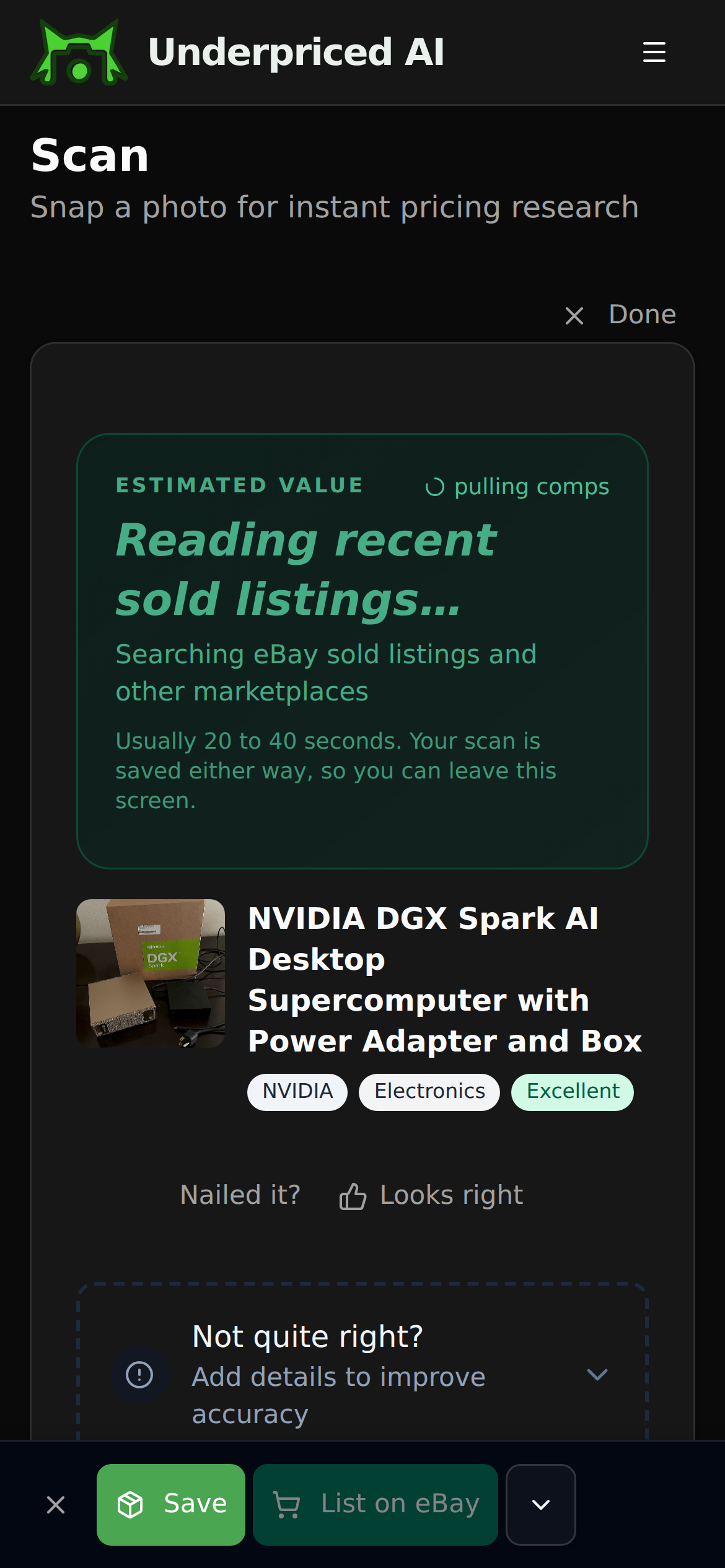
1. Photograph it
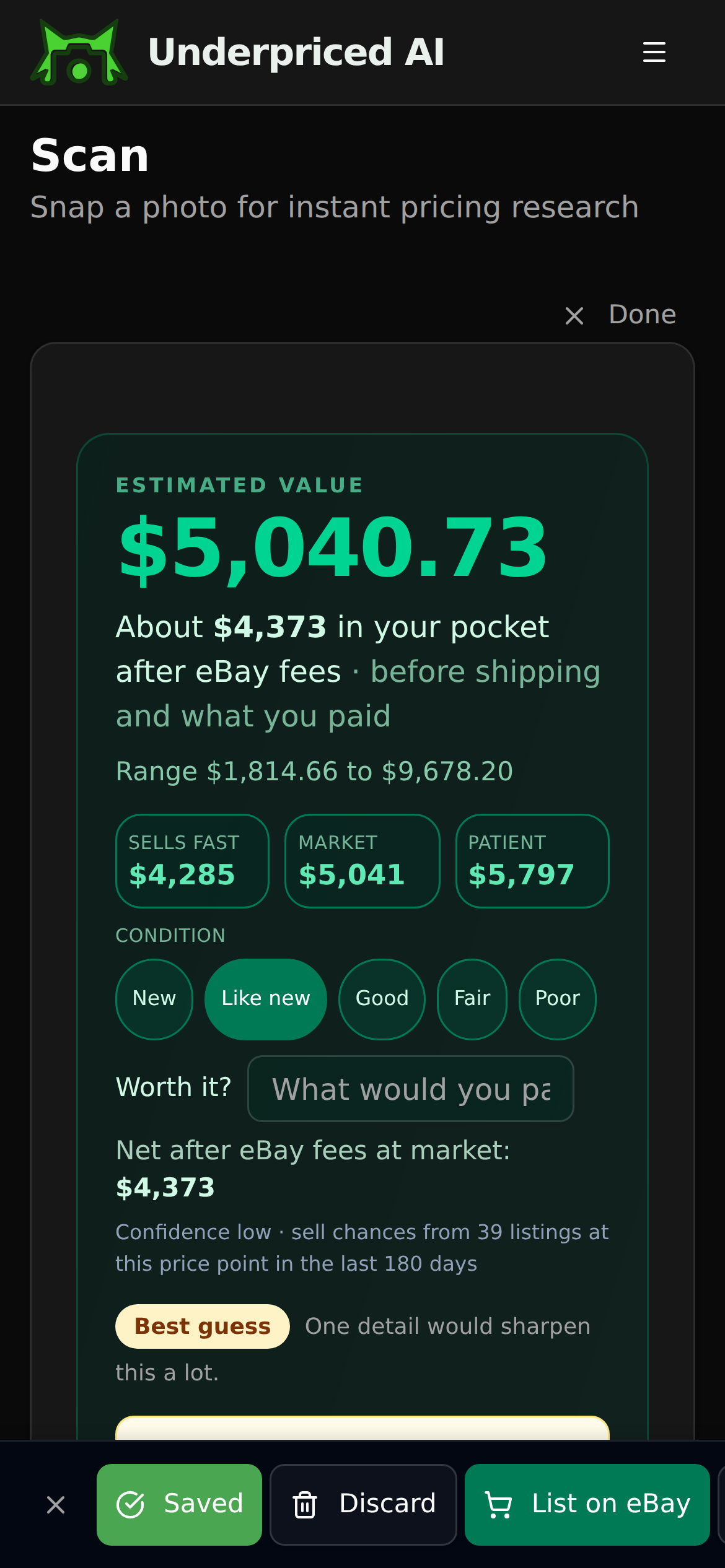
2. See what it sold for
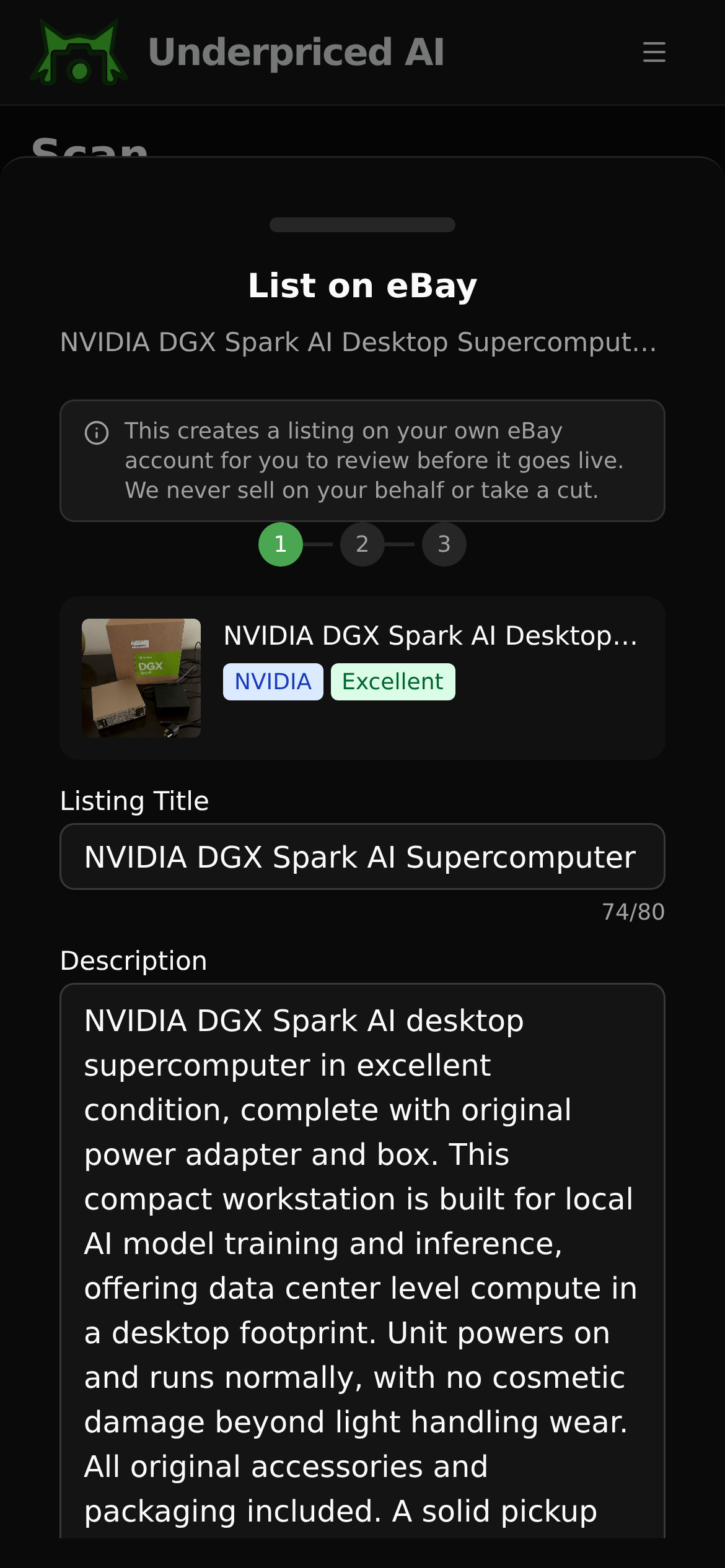
3. List it
Find our guides useful? Get more of them in Google Search.